Ovulation Study Normal Report: How to Read Your Follicular Study Results
One of the most common calls my patients make after undergoing a follicular study goes something like this: “Doctor, I’ve received my report. It says my follicle is 17 mm. Is that normal? Have I ovulated?”

Free Thursday Consultation
Book Your AppointmentI completely understand the anxiety behind these questions. Waiting for your follow-up appointment can feel like a long time when you’re eager to know whether your cycle is progressing as expected. Many couples immediately begin searching online for an ovulation study normal report, hoping to compare their findings with someone else’s.
Whenever I receive these calls, I gently remind my patients that a follicular study is not about a single number on one scan. It is a series of ultrasound examinations that tells us the complete story of your ovulation. One report alone rarely gives the full picture.
Throughout my years of treating infertility, I have found that follicular monitoring is one of the most valuable tools we have. It allows us to understand whether ovulation is occurring naturally, determine the best time for conception or treatment, and guide decisions for procedures such as IUI or IVF.
If you have recently undergone this test, understanding what a normal follicular monitoring report looks like can help you feel more informed while waiting to discuss your results with your doctor.
What Is an Ovulation Study?
An ovulation study, also called a follicular study, is a series of ultrasound scans performed during the menstrual cycle to monitor the growth of ovarian follicles. Each follicle contains an immature egg. During every menstrual cycle, several follicles begin to grow, but usually only one becomes the dominant follicle that releases the egg during ovulation.
Rather than performing just one scan, we monitor the ovaries over several days, usually between Day 10 and Day 18 of the menstrual cycle. This allows us to observe how the follicle develops and identify the precise timing of ovulation.
What Does an Ovulation Study Normal Report Show?
When patients search for an ovulation study normal report, they usually want to know whether their follicle is growing appropriately. A normal report typically evaluates three important aspects:
Follicle growth
In a healthy cycle, the dominant follicle gradually enlarges over several days. A developing follicle generally grows by approximately 1–2 mm each day, although slight variations are common. Monitoring this steady progression helps us determine whether the ovary is preparing for ovulation.
Dominant follicle size
One of the most important findings in the report is the size of the dominant follicle. A follicular study normal size at the time of ovulation is generally around 18–24 mm.
Once the follicle reaches this stage, ovulation usually occurs naturally or may be triggered with medication if required as part of fertility treatment. On a follow-up scan, we often observe that the follicle has collapsed or disappeared, indicating that the egg has likely been released.
Endometrial thickness
An ovulation study also evaluates the uterine lining, known as the endometrium. As the follicle matures, rising estrogen levels help the endometrium become thicker in preparation for embryo implantation. A healthy lining is generally expected to have an adequate thickness and favourable appearance by the time ovulation occurs.
I always explain to my patients that successful conception requires both a healthy egg and a receptive uterus. Monitoring these together gives us a much better understanding of the chances of pregnancy.

How Is the Test Performed?
Many women feel anxious before their first follicular study because they are unsure what to expect.
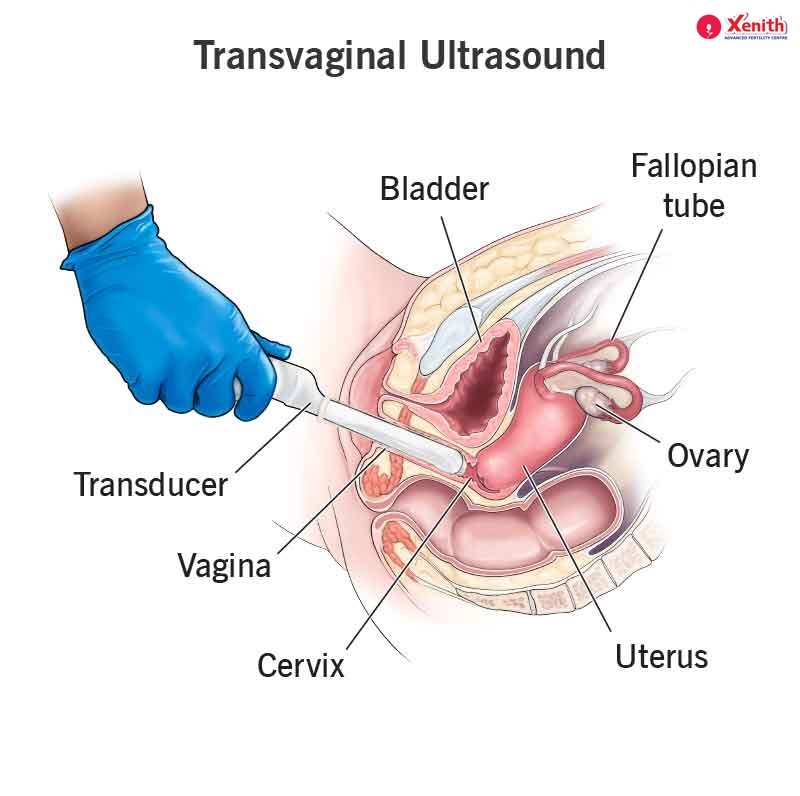
The examination is performed using a TVS ovulation study, also known as a transvaginal ultrasound scan. During the scan, a specially designed ultrasound probe is gently inserted into the vagina to obtain clear images of the ovaries and uterus. Because the ovaries are located deep within the pelvis, this method provides much more detailed information than an abdominal ultrasound.
The procedure usually takes only a few minutes and does not require a full bladder.
Depending on your menstrual cycle and treatment plan, your doctor may recommend the first scan around Day 10, followed by additional scans every one or two days until ovulation is confirmed.
When patients ask whether multiple scans are really necessary, I explain that ovulation is a dynamic process. A single ultrasound cannot accurately predict when the egg will be released, whereas serial monitoring allows us to identify the most fertile period with much greater precision.
How to Read a Follicular Study Report
Many patients wish to understand how to read a follicular study before discussing the report during their consultation.
Although every report may be presented slightly differently, it commonly includes:
- The size of each ovarian follicle
- Identification of the dominant follicle
- Endometrial thickness
- The day of the menstrual cycle on which the scan was performed
- Whether ovulation has occurred or is expected soon
Rather than focusing on one isolated measurement, I always evaluate the sequence of reports together to understand how the cycle has progressed.
What Can an Abnormal Report Show?
Not every follicular study follows the expected pattern. Fortunately, identifying abnormalities early allows us to adjust treatment appropriately.
Some common findings include:
No dominant follicle
Occasionally, several small follicles remain the same size without one becoming dominant. This may indicate that ovulation is not occurring during that cycle.
Thin endometrial lining
Sometimes the uterine lining does not develop adequately despite follicular growth. Since implantation depends on a receptive endometrium, we may recommend medication to improve the lining before proceeding with treatment.
Early or delayed ovulation
Some women ovulate earlier or later than expected. This is one reason why serial follicular monitoring is so valuable. It prevents us from relying solely on calendar dates and allows treatment to be timed according to the body’s actual ovulation pattern.
Whenever patients receive an unexpected report, I reassure them that one abnormal cycle does not necessarily indicate a serious fertility problem. Many factors including stress, illness, hormonal fluctuations, and conditions such as PCOS can influence ovulation from month to month.
What Happens If the Ovulation Study Is Abnormal?
One of the advantages of follicular monitoring is that it helps us make timely decisions instead of waiting through multiple unsuccessful cycles.
Depending on the findings, the next step may include:
- Adjusting ovulation-inducing medications
- Changing the timing of intercourse
- Planning intrauterine insemination (IUI) at the most appropriate time
- Investigating hormonal or ovulatory disorders
- Recommending IVF if other fertility factors are also present
Every treatment plan is individualised. I often remind couples that the purpose of follicular monitoring is not simply to identify problems, it is to guide us towards the most effective solution.
Ovulation Study Cost and How Many Scans Are Needed
Another practical question I hear frequently concerns the ovulation study cost. The overall cost depends on the number of ultrasound scans required during a menstrual cycle.
A typical follicular study generally involves three to five TVS scans, although some women may require fewer or additional scans depending on how quickly their follicles mature. The exact schedule varies from one patient to another because menstrual cycles are not identical. Some women ovulate earlier, while others require longer monitoring.
Although undergoing multiple scans may seem inconvenient, they provide valuable information that helps us accurately identify ovulation and optimise the timing of fertility treatment.
Final Thoughts

Receiving a follicular study report can naturally raise many questions, but it is important to remember that the report is only one part of your overall fertility assessment.
A normal ovulation study normal report generally shows steady follicle growth, a dominant follicle reaching approximately 18–24 mm, an appropriately developing endometrial lining, and confirmation that ovulation has occurred at the expected time. When the findings differ from this pattern, further evaluation simply helps us understand what support your body may need.
Throughout my practice, I have seen how reassuring follicular monitoring can be for couples. Rather than guessing whether ovulation is occurring, we can observe it directly and plan treatment with confidence.
At Xenith, we provide comprehensive TVS ovulation study and follicular monitoring tailored to each woman’s cycle. Whether you are trying to conceive naturally, planning IUI, or undergoing fertility treatment, careful ovulation monitoring helps us choose the right timing and the right approach for your journey towards parenthood.