

Normal Uterus Size: What Your Ultrasound Report Means for Fertility
One of the first things many women do after a pelvic ultrasound is read every line of the report. A question I hear almost every week is, “Doctor, my report says my uterus measures 7.5 cm. Is that normal?” Others worry because they have compared their report with a friend’s and noticed the measurements are different.

Free Thursday Consultation
Book Your AppointmentI completely understand this concern. When you’re trying to conceive, every number on an ultrasound report suddenly feels significant. It is natural to wonder whether your uterus is “too small” or “too large” for pregnancy.
Over the years, I have reassured countless women that uterus size alone rarely tells the complete story. I remember a patient who came to me after reading online that her uterus was slightly smaller than average. She was convinced this was the reason she had not conceived. However, her uterine cavity was perfectly healthy, she was ovulating regularly, and the actual issue turned out to be unrelated to her uterus. On the other hand, I have also treated women whose uterine measurements appeared normal, but whose fertility was affected by fibroids or structural abnormalities inside the uterus.
That is why I encourage my patients not to focus on a single number. Understanding normal uterus size is helpful, but interpreting it correctly requires looking at the overall picture.
Why Does Your Ultrasound Mention Uterus Size?
A pelvic ultrasound is one of the most common investigations performed during a fertility evaluation and routine gynaecological assessment.
During the scan, the radiologist records several details about the uterus, including:
- Length
- Width
- Thickness
- Shape
- Position
- Appearance of the uterine lining (endometrium)
These measurements help us understand whether the uterus has developed normally and whether there are conditions that may require further evaluation. Many patients become anxious simply because they see measurements in centimetres on the report. In reality, these numbers are recorded routinely for every woman undergoing an ultrasound.
What Is the Normal Uterus Size?
There is no single measurement that applies to every woman. Normal uterus size varies depending on age, hormonal status, body build, and whether a woman has previously been pregnant.
The table below provides the typical ranges seen on pelvic ultrasound.
Patient Group | Typical Uterus Length | Width | Thickness |
Adult woman who has never been pregnant | 6–8 cm | 3–5 cm | 2–4 cm |
Woman who has had one or more pregnancies | 7–9 cm | 4–6 cm | 3–5 cm |
After menopause | May become smaller due to reduced hormone levels |
|
|
These values represent average ranges rather than strict cut-offs.

When patients search for uterus size in cm, they often expect one “perfect” number. However, healthy women naturally have variations within these ranges. A uterus measuring slightly above or below the average is not automatically abnormal.
What Affects Uterus Size?
Several natural and medical factors influence uterine dimensions.
Previous pregnancy
Pregnancy causes the uterus to stretch significantly. Although it gradually returns to its original size after delivery, it usually remains slightly larger than before the first pregnancy. This is one reason why women who have had children often have larger uterine measurements than women who have never been pregnant.
Age and hormonal status
Hormones play an important role in maintaining uterine size. During the reproductive years, estrogen helps keep the uterus healthy and well developed. After menopause, declining hormone levels cause the uterus to become smaller over time. This change is completely normal.
Fibroids
Fibroids are one of the most common reasons for an enlarged uterus. These non-cancerous growths may increase the overall size of the uterus without necessarily affecting fertility. However, if they distort the uterine cavity, they can interfere with implantation or increase the risk of miscarriage.
Adenomyosis
Another condition that may enlarge the uterus is adenomyosis. In women with adenomyosis, the uterine muscle becomes thicker because endometrial tissue grows within it. Depending on its severity, this may affect fertility and pregnancy outcomes.
Does Uterus Size Affect Fertility?
This is probably the question I answer most frequently. The reassuring news is that uterus size and fertility are not always directly related.
Many women with a slightly smaller uterus conceive naturally without difficulty. Similarly, women with a mildly enlarged uterus often have completely healthy pregnancies.
When I discuss ultrasound reports with patients, I explain that fertility depends much more on:
- A healthy uterine cavity
- A receptive endometrial lining
- Regular ovulation
- Good embryo quality
- Healthy fallopian tubes
- Male fertility factors
The external dimensions of the uterus are only one small part of the overall assessment.
I have treated women whose uterine measurements were at the lower end of the normal range and who conceived in their very first treatment cycle. I have also cared for women whose uterus measured within average limits but required treatment because of problems inside the uterine cavity.
When Does Uterus Size Become Clinically Relevant?
Although slight variations in uterine measurements are usually harmless, there are situations where the size or shape of the uterus requires further investigation.
Congenital uterine abnormalities
Some women are born with structural differences such as:
- Septate uterus
- Bicornuate uterus
- Unicornuate uterus

- These conditions affect the shape of the uterine cavity rather than simply its size. Depending on the severity, they may contribute to infertility, recurrent miscarriage, or pregnancy complications.
Fibroids affecting the cavity
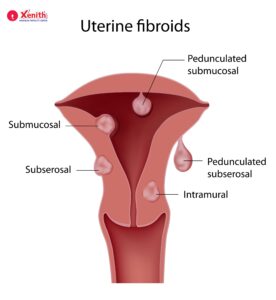
Fibroids located inside or pressing into the uterine cavity may interfere with embryo implantation even when the overall uterine size appears normal. In these cases, treatment may improve fertility outcomes.
Adenomyosis

When adenomyosis significantly enlarges the uterus or affects the endometrium, additional treatment may be recommended before attempting pregnancy or IVF. In other words, it is usually the underlying condition causing the change in size, rather than the size itself, that influences fertility.
What Should You Ask Your Doctor?
If your ultrasound report mentions an abnormal uterine size, I encourage you not to panic.
Instead, ask your doctor questions such as:
- Is my uterus outside the normal range?
- Is the uterine cavity normal?
- Are fibroids or adenomyosis present?
- Does the uterine lining appear healthy?
- Will this affect natural conception?
- Does this change my IVF or IUI treatment plan?
- Do I need any additional imaging, such as saline sonography or hysteroscopy?
These questions help shift the conversation from a single measurement to understanding what it actually means for your fertility.
Throughout my years of practice, I have found that patients feel much more reassured once they understand that ultrasound findings are interpreted in the context of their entire medical history, symptoms, and fertility evaluation, not as isolated numbers.
Final Thoughts
Seeing measurements on an ultrasound report can understandably raise concerns, but it is important to remember that normal uterus size exists within a range rather than as one fixed number.
A healthy uterus varies naturally depending on age, hormonal status, and previous pregnancies. In most women, slight differences in uterus size in cm do not affect fertility or pregnancy. What matters much more is the health of the uterine cavity, the quality of the endometrial lining, and whether conditions such as fibroids, adenomyosis, or congenital uterine abnormalities are present.
Throughout my practice, I have seen how much unnecessary anxiety can arise from trying to interpret ultrasound measurements without medical guidance. My advice is always the same: use your report as the beginning of a conversation with your doctor, not as the final answer.
At Xenith, we perform comprehensive pelvic ultrasound evaluations to assess not only uterine size but also the overall health of the uterus and reproductive organs. If you have questions about your ultrasound report or are planning a pregnancy, our team is here to help you understand your results and guide you towards the most appropriate care with confidence and clarity.