Egg White Discharge and Early Pregnancy:
What Your Cervical Mucus Is Telling You
One of the questions I hear most often from women trying to conceive is, “Doctor, I’ve noticed egg white discharge. Could I already be pregnant?”

Free Thursday Consultation
Book Your AppointmentI understand why this question comes up so frequently. When you’re hoping for a pregnancy, every symptom suddenly seems significant. A change in cervical mucus, mild cramping, or breast tenderness can all leave you wondering whether implantation has occurred.
One thing I always explain to my patients is that cervical mucus naturally changes throughout the menstrual cycle. These changes are largely driven by hormones and provide important clues about ovulation and fertility. However, they do not always indicate pregnancy.
Over the years, I have met many women who were convinced they were pregnant because they noticed increased discharge, only to find that they were simply approaching ovulation. I have also cared for women who had very little
noticeable discharge but went on to have perfectly healthy pregnancies.
Understanding what egg white discharge in early pregnancy really means begins with understanding how cervical mucus behaves during a normal menstrual cycle.
Why Does Cervical Mucus Change Throughout
the Cycle?
Cervical mucus is produced by glands in the cervix, and its onsistency changes in response to fluctuations in estrogen and progesterone. These changes are not
random, they serve an important purpose. At certain times of the cycle, cervical mucus helps sperm survive and travel towards the egg. At other times, it becomes thicker and less welcoming, helping protect the uterus from infection.
I often tell my patients that cervical mucus acts almost like a natural fertility guide. By learning to recognise these changes, many omen gain a better understanding of when they are most likely to conceive.
Egg White Cervical Mucus and the Fertile
Window
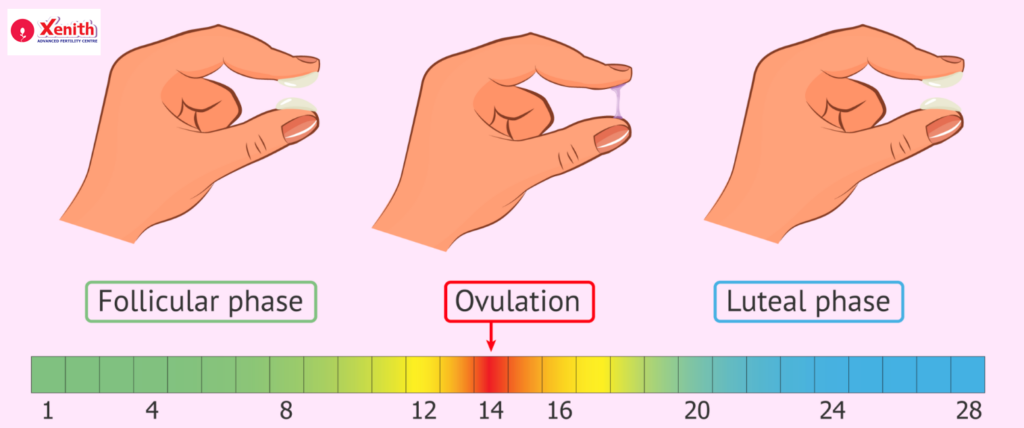
One of the most important types of cervical mucus is egg white cervical mucus, which appears just before ovulation.
This mucus is typically:
• Clear or slightly cloudy
• Stretchy
• Slippery
• Similar
in texture to raw egg white

High estrogen levels during the days leading up to ovulation produce this type of mucus.
For couples trying to conceive, this is usually the most fertile phase of the menstrual cycle. The slippery consistency allows sperm to move more easily through the cervix and survive longer inside the reproductive tract.
When patients ask me about the best time to have intercourse, I often explain that noticing egg white cervical mucus during the fertile window is one of the body’s natural signs that ovulation is approaching. However, not every woman notices obvious changes, and the amount of mucus varies from person to person.
What Does Discharge Look Like After
Ovulation?
Once ovulation has occurred, hormone levels change.
Progesterone becomes the dominant hormone, causing cervical mucus to become:
• Thicker
• Creamier
• Sticky
• Less stretchy
• Reduced in quantity for many women
This change is completely normal.
Many women worry because their egg white discharge disappears after ovulation. In reality, this simply reflects the hormonal shift that occurs once the egg has been released. When I review menstrual histories with patients, these normal
changes often help us estimate whether ovulation has
likely occurred, especially when combined with other observations.
Can Egg White Discharge Be an Early
Pregnancy Sign?
This is probably the question that brings most women to my clinic. Can egg white discharge in early pregnancy happen?
The answer is yes, but it is not specific enough to confirm pregnancy.
Some women notice increased vaginal discharge after implantation because rising hormone levels increase blood flow to the reproductive tract and stimulate
cervical glands. Others experience creamy white discharge. Some notice very little change at all. In other words, cervical mucus changes in early pregnancy
vary considerably from one woman to another.
Similarly, some women continue to notice occasional stretchy mucus even after ovulation due to normal hormonal fluctuations. This is why I always advise my patients not to rely solely on discharge as a sign of pregnancy. The only reliable way
to confirm pregnancy is through appropriate testing.
Can Discharge Alone Confirm Pregnancy?
The simple answer is no.
Throughout my years of practice, I have learned that symptoms alone rarely provide a definitive answer. Breast tenderness, fatigue, mild cramping, increased discharge, and bloating can all occur before menstruation as well as during
early pregnancy.
This is because the hormones involved are remarkably similar during both phases. Whenever patients ask me whether their discharge means they are pregnant, I
encourage them to be patient until the appropriate time for a pregnancy test.
Home pregnancy tests and blood hCG testing remain far more reliable than interpreting cervical mucus alone.
When Is Vaginal Discharge a Cause for
Concern?
Most cervical mucus changes are completely normal. However, I advise women not to ignore discharge that is associated with symptoms suggesting infection.
Seek medical evaluation if your discharge becomes:
• Yellow, green, or grey
• Thick and cottage cheese-like
• Foul-smelling
• Associated with itching or burning
• Accompanied by pelvic pain or fever
Infections can affect comfort, reproductive health, and, in some cases, fertility if left untreated. Fortunately, most vaginal infections can be diagnosed and treated
effectively once identified.
Using Cervical Mucus to Improve Your Chances
of Conception
For couples trying to conceive, cervical mucus observation can be a useful part of fertility awareness. However, I rarely recommend relying on it alone.
Instead, I encourage women to combine cervical mucus tracking with other methods such
as:
• Tracking menstrual cycles
• Monitoring basal body temperature (BBT)
• Ovulation prediction kits
• Follicular or ovulation studies when clinically indicated
When these methods are used together, they provide a much clearer understanding of
the fertile window.
Final Thoughts
If you’ve been searching for information about egg white discharge in early pregnancy, remember that cervical mucus is an important indicator of hormonal
changes—but not a reliable pregnancy test.
In most women, egg white cervical mucus appears during the fertile window before ovulation, while discharge after ovulation usually becomes thicker or creamier
because of rising progesterone levels. Although cervical mucus changes in early pregnancy can occur, they vary greatly from one woman to another and cannot
confirm pregnancy on their own.
If you have been trying to conceive for 6 to 12 months without success, I encourage you not to continue relying solely on symptom tracking. At Xenith, we offer comprehensive fertility evaluations, including ovulation monitoring,
hormonal assessment, and personalised guidance to help you understand your cycle and improve your chances of achieving a healthy pregnancy.