Patients often walk into my clinic holding their ultrasound report, worried about one word: bulky. They may have no symptoms at all, yet the finding leaves them wondering whether something is wrong with their ovaries or whether it will affect their chances of pregnancy.
Understanding bulky ovary meaning starts with one important point: a bulky ovary is an ultrasound finding, not a diagnosis by itself. The significance depends on the ovary’s size, appearance, menstrual cycle, symptoms and medical history. In many cases, the finding is temporary and harmless. In others, it may point towards PCOS, an ovarian cyst or endometriosis. Let me explain how I assess this finding and when further evaluation is needed.

Free Thursday Consultation
Book Your AppointmentWhat Does “Bulky Ovary” Mean on an Ultrasound Report?
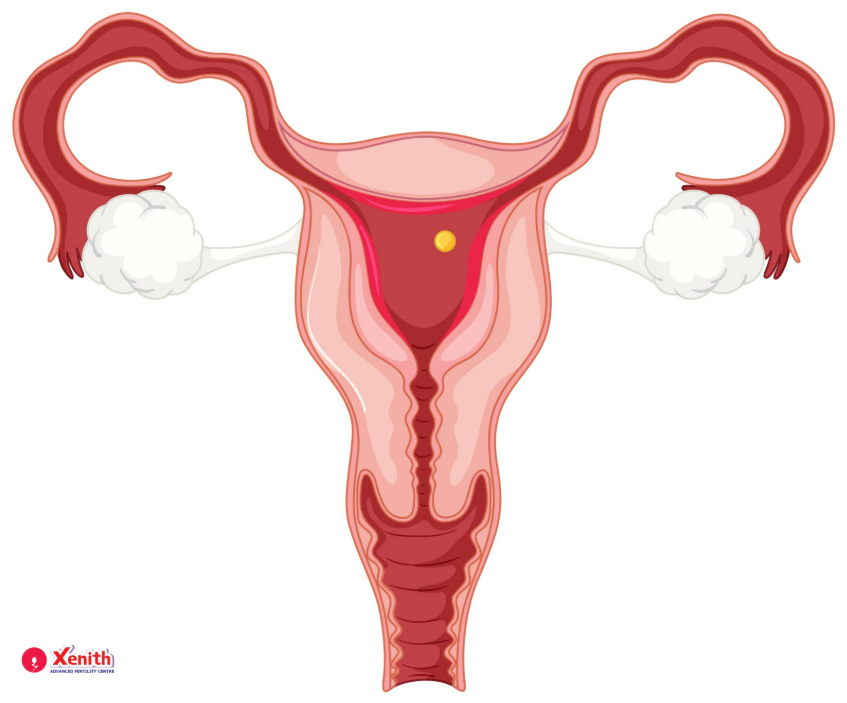
Radiologists use the term bulky ovary when an ovary appears larger than expected or has an increased ovarian volume on ultrasound. Normal ovarian size varies with age, hormonal activity and menopausal status. In reproductive-age women, an ovary is often around 3-5 cm long, although its dimensions can change throughout the menstrual cycle.
The measurements alone do not tell the whole story. The number of follicles, presence of a cyst and overall ovarian appearance are equally important.
Why the cycle day of your scan matters
The timing of the scan can influence the findings. Around ovulation, a dominant follicle grows and may temporarily increase the size of one ovary. After ovulation, the corpus luteum forms and can also make the ovary appear larger. This is why I consider the day of your menstrual cycle before interpreting an ultrasound report. A finding that looks concerning at first may simply reflect normal ovarian activity.
One bulky ovary vs both ovaries bulky
If only one ovary is bulky, I look more closely for a dominant follicle, functional cyst, or another localised growth. If both ovaries appear bulky, hormonal factors, polycystic ovarian morphology or ovarian stimulation may be relevant. However, this is not a fixed rule. The ultrasound appearance and clinical context determine what the finding means.
Common Causes of a Bulky Ovary
Several conditions can cause enlarged ovaries. Some require only observation, while others need treatment or follow-up.
| Cause | Usually one or both ovaries? | Typical clues | Needs treatment? |
| Normal dominant follicle or corpus luteum | Usually one | Mid-cycle scan or recent ovulation | Usually not |
| Functional (follicular) cyst | Usually one | Fluid-filled cyst; may cause mild discomfort | Often resolves on its own |
| Polycystic ovaries / PCOS | Often both | Increased follicle count, irregular periods or signs of androgen excess | Depends on symptoms and fertility goals |
| Endometrioma | Usually one, sometimes both | Endometriosis, painful periods or pelvic pain | Individualised assessment |
| Dermoid or other benign cyst | Usually one | Distinct cystic appearance on ultrasound | Observation or surgery, depending on features |
| Ovarian stimulation during fertility treatment | One or both | Enlarged follicles during treatment | Monitoring may be needed |
| Pelvic infection | Variable | Pelvic pain, fever or abnormal discharge | Requires medical assessment and treatment |
Bulky ovaries and PCOS
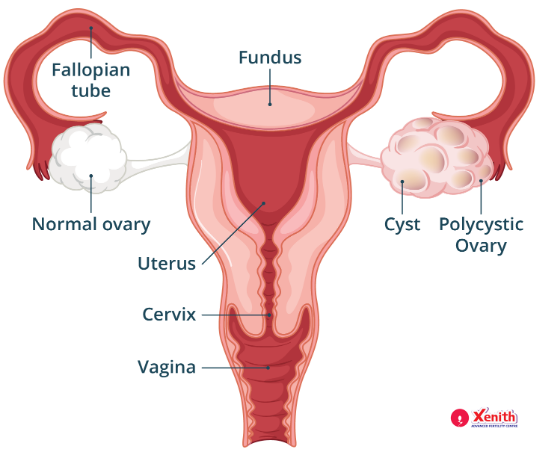
One common concern is whether bulky ovary PCOS are the same thing. They are not. Polycystic ovarian morphology refers to an ultrasound appearance involving a higher number of small follicles and, in some cases, increased ovarian volume. These follicles are not the same as harmful cysts.
A bulky ovary alone does not mean you have PCOS. PCOS is diagnosed using a combination of clinical and hormonal criteria, including ovulatory dysfunction and signs of increased androgen levels, after other causes have been considered. Ultrasound findings may contribute to the diagnosis, but they are not always necessary.
I assess menstrual regularity, acne, excess facial or body hair, and relevant blood tests before deciding whether PCOS is likely. This distinction matters because treatment should address the actual problem rather than the scan wording alone.
Bulky ovary with endometriosis
An endometrioma is a cyst associated with endometriosis, a condition in which tissue similar to the uterine lining grows outside the uterus. It can cause an ovary to appear enlarged and may be associated with painful periods, pelvic pain or difficulty conceiving.
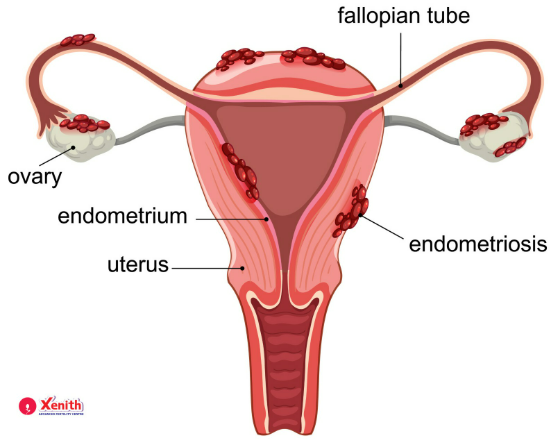

Not every endometrioma requires surgery. I consider the cyst’s size and appearance, symptoms, age, ovarian reserve and pregnancy plans before recommending management. Surgery can sometimes affect ovarian reserve, so the decision needs careful discussion, particularly for women planning fertility treatment.
Bulky Uterus and Bulky Ovary Together: What Does That Mean?
When an ultrasound reports both a bulky uterus and a bulky ovary, the findings may have separate causes or be related to an underlying condition.
A bulky uterus can be associated with conditions such as adenomyosis or fibroids, while an enlarged ovary may be related to a cyst, PCOS or endometriosis. Endometriosis and adenomyosis can also coexist.
The important thing is not to assume that both findings indicate one particular disease. I review the detailed ultrasound description, symptoms, menstrual history and examination findings before recommending further tests.
Symptoms That May Come With a Bulky Ovary
Many women with bulky ovaries have no symptoms and discover the finding during a routine scan.
When symptoms occur, they may include:
- Irregular or missed periods.
- Pelvic heaviness, discomfort or bloating.
- Painful periods, particularly with endometriosis.
- Acne or excess facial and body hair, which may suggest PCOS.
- Difficulty conceiving, depending on the underlying cause.
The symptoms alone cannot establish the diagnosis. An ultrasound and, where appropriate, additional tests help clarify what is happening.
When a Bulky Ovary Needs Urgent Attention
Please seek urgent medical assessment if you experience:
- Sudden, severe pain on one side of the lower abdomen.
- Nausea or vomiting along with significant pelvic pain.
- Fever with pelvic pain.
- Fainting, marked dizziness or severe weakness.
- A newly detected or enlarging ovarian mass after menopause.
Sudden one-sided pain with nausea or vomiting can indicate ovarian torsion, in which the ovary twists and its blood supply may be compromised. This is a medical emergency. Do not wait for a routine appointment if these symptoms develop. An ovarian enlargement after menopause also deserves prompt evaluation, although it does not automatically mean cancer.
Does a Bulky Ovary Affect Fertility?
The answer depends on the cause.
A temporary enlargement from a normal dominant follicle or corpus luteum usually does not affect fertility. PCOS may interfere with regular ovulation, making conception less predictable. An endometrioma may be associated with reduced ovarian reserve or other fertility challenges, although the impact varies from person to person.
When a patient comes to me with a bulky ovary report, I do not make treatment decisions based on that phrase alone. I look at the ovarian volume, follicle count, cyst characteristics, menstrual pattern, age, ovarian reserve and how long she has been trying to conceive. I also consider whether the other ovary appears normal. My aim is to distinguish a temporary finding from a condition that needs attention, while avoiding unnecessary treatment.
Have a report that says bulky ovary? Send it for a second opinion.
Tests Your Doctor May Recommend Next
Depending on the initial findings, your doctor may suggest:
- Repeat ultrasound: A scan during the early follicular phase, usually cycle days 2-5, may help clarify ovarian size and follicle count. This is not appropriate for every situation, particularly when urgent symptoms or a concerning cyst are present.
- Hormone tests: AMH, LH, FSH, testosterone, TSH and prolactin may be recommended depending on the suspected cause. Not every patient needs every test.
- Follicle tracking: Serial ultrasound scans can monitor follicular growth and ovulation, especially when you are trying to conceive or undergoing fertility treatment.
Additional tests may be required if the scan shows a persistent or complex cyst.
Treatment Options for a Bulky Ovary
Treatment depends on what is causing the enlargement.
Watch and rescan
Many functional cysts resolve without intervention. If the cyst looks benign and symptoms are mild or absent, your doctor may recommend observation and a follow-up scan.
PCOS management
Management may include lifestyle changes, addressing metabolic health and medication to regulate cycles or support ovulation. If you are trying to conceive, ovulation induction may be considered after an appropriate fertility assessment.
Surgery for persistent or complex cysts
Laparoscopy or another surgical approach may be recommended for selected persistent, symptomatic or suspicious cysts. The decision depends on the cyst’s features, symptoms and risks. Preserving healthy ovarian tissue is especially important when future fertility is a priority.
A fertility-focused plan
If pregnancy is your goal, the plan should consider ovulation, tubal health, semen analysis and ovarian reserve, not just ovarian size. Some women may need only reassurance; others may benefit from targeted treatment or assisted reproductive techniques.
Frequently Asked Questions
1. What is the meaning of bulky ovary in an ultrasound report?
It means the ovary appears larger than expected or has increased volume. The cause may be normal cycle-related changes, a functional cyst, PCOS, endometriosis or another condition. The full scan report and clinical history help determine its significance.
2. Is a bulky ovary dangerous?
Not necessarily. Many causes are harmless or temporary. However, sudden severe pain, vomiting, fever or fainting requires urgent assessment, and a persistent or complex ovarian mass needs appropriate investigation.
3. Does a bulky ovary mean I have PCOS?
No. PCOS is diagnosed using clinical and, when appropriate, ultrasound and hormonal findings. An enlarged ovary by itself is insufficient to establish the diagnosis.
4. Can I get pregnant with bulky ovaries?
Yes, many women with bulky ovaries conceive naturally or with treatment. The outlook depends on the underlying cause and other fertility factors.
5. Can a bulky ovary become normal again?
Yes, if the enlargement is due to a temporary follicle or a functional cyst that resolves. Other causes may persist and require monitoring or treatment.
6. What should I avoid with bulky ovaries?
Avoid self-medicating with hormonal or fertility medicines and do not ignore severe pelvic pain. There is no single food or activity that all women with bulky ovaries must avoid. Follow advice based on the actual diagnosis, and ask your doctor about exercise restrictions if you have a large cyst or are undergoing ovarian stimulation.
Conclusion
A scan report describing a bulky ovary can sound worrying, but the finding needs context before conclusions are drawn. Understanding bulky ovary meaning involves looking at ovarian volume, follicle count, cyst characteristics, symptoms and menstrual timing.
At Xenith IVF, I focus on identifying the cause and recommending only the evaluation or treatment that is appropriate for your circumstances. If you have concerns about your ultrasound report or fertility, book an appointment at our Wakad or Koregaon Park clinic, or ask about a video consultation.