“Your embryos are frozen, so what happens now?” This is one of the questions I hear from patients preparing for their next step in IVF. They want to know when medicines begin, how many scans they will need, when the embryo will be transferred and how long they must wait for the result.
Understanding the frozen embryo transfer timeline can make the process feel more manageable. A frozen embryo transfer (FET) cycle often takes around 3-5 weeks, although the duration varies with your cycle and treatment protocol. The uterine lining is prepared using natural ovulation or hormone medication, followed by carefully timed progesterone. After transfer, a blood pregnancy test confirms the result. Let me walk you through each stage.

Free Thursday Consultation
Book Your AppointmentPlanning an FET? Speak to our IVF team.
What Is a Frozen Embryo Transfer?
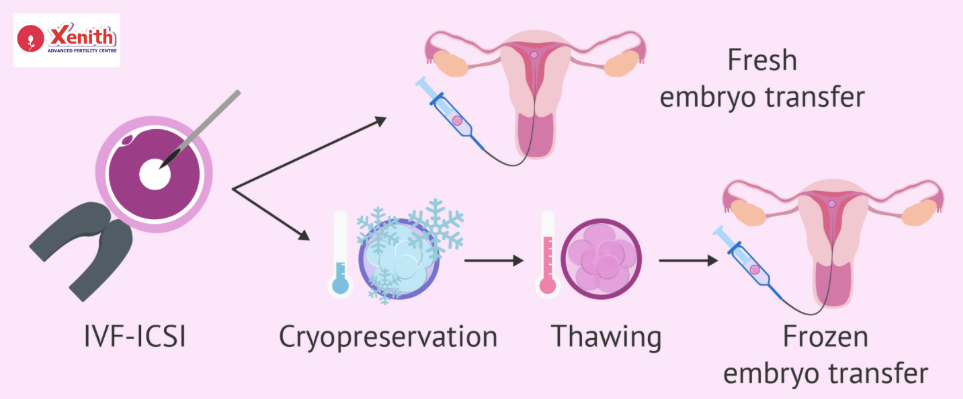
A frozen embryo transfer is a procedure in which an embryo frozen during an earlier IVF cycle is thawed and transferred into the uterus. The embryo may be a blastocyst, which is usually a Day 5 or Day 6 embryo.
Why doctors often recommend a frozen transfer instead of a fresh one
A frozen transfer may be recommended when:
- There is a concern about ovarian hyperstimulation syndrome (OHSS).
- Progesterone levels rise too early during ovarian stimulation.
- Embryos need to undergo preimplantation genetic testing (PGT).
- The uterine lining is not ready for transfer.
- A freeze-all strategy is safer or more appropriate.
- Surplus embryos from an earlier IVF cycle are available.
A frozen transfer is not automatically better than a fresh transfer for everyone. I recommend it when the clinical circumstances make it the more suitable option.
The 3 Types of FET Cycles
The frozen embryo transfer timeline depends largely on how we prepare the endometrium, or uterine lining.
| Cycle type | How the lining is prepared | Medicines | Monitoring visits | Best suited for |
| Natural cycle FET | Your own follicle develops and ovulation occurs naturally | Progesterone may be prescribed | Often more frequent around ovulation | Women with regular ovulatory cycles |
| Modified natural FET | Natural follicle development, with an hCG trigger to help time ovulation | Trigger injection; progesterone may be used | Scans to monitor follicle growth and timing | Women who ovulate but need more predictable timing |
| Medicated or hormone replacement cycle | Estrogen builds the lining, then progesterone prepares it for the embryo | Estradiol tablets or patches, followed by progesterone | Baseline and lining scans, with additional checks if needed | Women with irregular cycles, absent ovulation or scheduling needs |
There is no single best protocol for every patient. The choice depends on your menstrual pattern, medical history, previous treatment and the clinic’s assessment.
Medicated FET Timeline: Day by Day
A medicated FET cycle, also called a hormone replacement cycle, uses estrogen and progesterone to prepare the uterus. The following is a typical outline, not a fixed prescription.
| Cycle timing | What happens | What you do |
| Days 1-3 | Your period begins; a baseline scan may be performed | Inform your clinic and attend the scan as instructed |
| From around Day 2 or 3 | Estrogen treatment begins | Take estradiol tablets or use prescribed patches as directed |
| Around Days 10-14 | An ultrasound checks endometrial thickness and pattern | Attend the lining scan; further monitoring may be needed |
| Progesterone start day | Progesterone support begins once the lining is considered ready | Follow the exact start date and time given by your clinic |
| Transfer day | The embryo is thawed and transferred at the appropriate time | Follow the clinic’s instructions, including bladder preparation |
| Around 9-11 days after a blastocyst transfer | A blood beta-hCG test may be scheduled | Test on the date advised by your clinic |
The timing of transfer is linked to how long the lining has been exposed to progesterone. For a blastocyst, transfer is commonly scheduled after approximately five days of progesterone exposure, with counting conventions and exact timing varying by protocol. Do not change your medication or transfer timing based on a general timeline.
What if my lining isn’t thick enough?
If the endometrial thickness or appearance is not suitable, I may recommend continuing estrogen for additional days and repeating the scan. Depending on the findings, we may investigate further or postpone the cycle.
A delay does not necessarily mean the cycle has failed. The aim is to proceed when the conditions are appropriate, rather than rush the transfer.
Natural Cycle FET Timeline: Day by Day
In a natural cycle, we use your body’s own hormonal changes to time the transfer.
| Stage | What happens |
| Period begins | The cycle is recorded and monitoring is planned |
| Follicle monitoring | Ultrasound scans track follicle growth and the lining |
| LH surge or trigger | Ovulation timing is identified, either naturally or with a trigger in a modified natural cycle |
| After ovulation | Progesterone support may be prescribed, depending on the protocol |
| About five days after ovulation | A blastocyst is commonly transferred, with timing adjusted to the clinic’s protocol |
| After transfer | Beta-hCG testing is scheduled for the advised date |
Pros and cons of a natural FET
The main advantage is that fewer hormonal medicines may be needed. However, natural cycles often require closer monitoring around the LH surge and ovulation, and the timing can be less predictable. A modified natural cycle can offer some additional control.
Natural vs Medicated FET: Which Is Better for You?
I choose the protocol based on the patient rather than following one approach for everyone.
- Regular periods and predictable ovulation: A natural or modified natural FET may be suitable.
- Irregular cycles or absent ovulation: A medicated cycle may provide more control over lining preparation.
- Working couples who need scheduling flexibility: A medicated cycle can sometimes make appointment planning easier, although it still requires monitoring.
- Previous failed transfers: I review embryo details, uterine findings, progesterone timing and the previous treatment record before deciding whether a protocol change or further investigation is appropriate.
A failed transfer does not automatically mean you need a different protocol or advanced testing. I first look for a clear clinical reason before adding investigations.
Had a failed transfer before? Get a second opinion on your FET protocol.
What Happens on Transfer Day?
The FET procedure is generally brief and does not usually require general anaesthesia. First, the embryology team thaws the embryo and checks its survival and appearance. You may be asked to arrive with a comfortably full bladder, as this can help with ultrasound guidance. I then pass a thin catheter through the cervix and place the embryo into the uterus under ultrasound guidance.
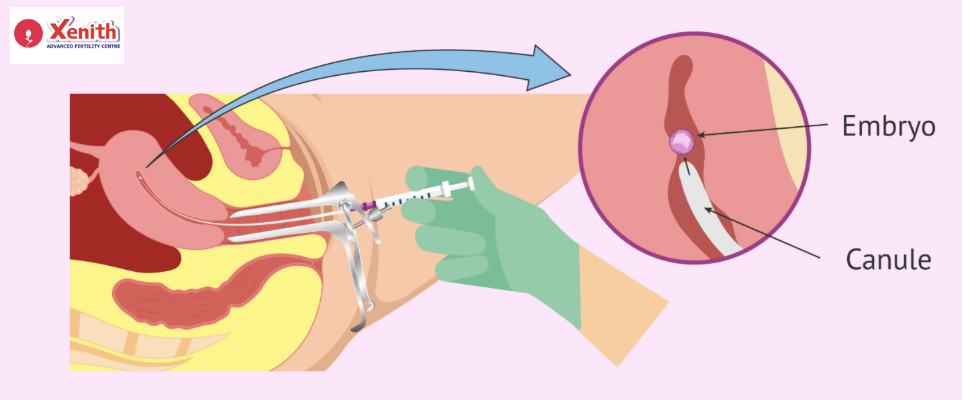
The procedure usually takes only a few minutes. A short rest may follow, but prolonged bed rest is generally unnecessary. Your clinic will advise you about any individual precautions.
Tests That May Be Done Before an FET
ERA test for repeated implantation failure
An endometrial receptivity analysis (ERA) assesses gene-expression patterns in a sample of the uterine lining to estimate its receptivity timing. Its routine use has not been shown to improve outcomes for all IVF patients. I would discuss it selectively rather than recommend it automatically after one unsuccessful transfer.
Hysteroscopy
Hysteroscopy allows the doctor to examine the uterine cavity directly. It may be considered if scans or symptoms suggest a polyp, adhesion or another cavity abnormality.
Mock transfer
A mock transfer is a practice procedure that helps assess the route into the uterus and identify any technical difficulty. It can be useful in selected cases, but it is not necessary for everyone.
The Two-Week Wait After FET
After transfer, continue all prescribed medicines, including progesterone support, unless your clinic tells you otherwise. Light everyday activity is generally acceptable, and strict bed rest is not usually required. Follow any specific restrictions related to your health or treatment.
Early symptoms vs medicine side effects
Mild cramps, bloating, breast tenderness or fatigue may occur after transfer. Progesterone can cause symptoms that resemble early pregnancy, while some patients have no symptoms at all. Symptoms cannot reliably confirm whether implantation has occurred.
What if the result is weakly positive?
A low or borderline beta-hCG result may need repeating after approximately 48 hours to assess the trend. One result alone cannot establish whether the pregnancy is progressing normally. Contact your clinic for interpretation and do not stop prescribed medicines without advice.
FET Success: What Affects Your Chances?
FET outcomes depend on several factors, including embryo quality, the age at egg retrieval, endometrial preparation, progesterone timing and underlying medical conditions. The age at which the eggs were collected is particularly important when considering embryo potential; your age at transfer is not the only factor.
There is no universal success rate that applies to every patient. I explain the expected outlook using the available embryo information and individual clinical details, without promising a particular outcome.
Frequently Asked Questions
1. How long does a frozen embryo transfer cycle take?
A medicated cycle often takes around 3-5 weeks from the start of the period to transfer, though it may take longer. Natural cycles vary according to follicle growth and ovulation.
2. Is natural cycle FET better than medicated FET?
Neither is universally better. Natural FET may suit women who ovulate regularly, while medicated FET can be useful for irregular or absent ovulation and when scheduling control is needed.
3. When is embryo transfer done after starting progesterone?
A blastocyst is commonly transferred after about five days of progesterone exposure. The exact timing depends on the embryo stage and the clinic’s protocol.
4. What endometrial thickness is needed for FET?
Many clinics look for a lining around 7 mm or more, along with a suitable pattern, but there is no absolute cutoff that applies to every patient. The full clinical picture matters.
5. Is bed rest needed after frozen embryo transfer?
Usually not. Gentle, normal daily activity is generally acceptable unless your doctor advises otherwise.
6. When should I take a pregnancy test after FET?
A blood beta-hCG test is often scheduled around 9-11 days after blastocyst transfer. Follow your clinic’s exact date, and avoid interpreting an early home test as definitive.
7. Are frozen embryos as successful as fresh embryos?
Frozen embryo transfers can have outcomes comparable to fresh transfers in appropriate circumstances. Results depend on embryo quality, patient factors and the treatment context; freezing does not guarantee a better outcome.
Conclusion
The frozen embryo transfer timeline can feel complicated at first, but each step has a purpose: preparing the uterine lining, timing progesterone correctly, transferring the embryo and testing at the appropriate time. Your schedule may differ from another patient’s, and that is normal.
At Xenith IVF, I encourage patients to understand their protocol and ask questions whenever something is unclear. Book an appointment at our Wakad or Koregaon Park clinic, or ask our team about a video consultation to discuss your FET plan.