Introduction: Understanding the Silent Blockage
For many couples trying to conceive, infertility can feel confusing and emotionally overwhelming. In India, conversations about male infertility are still not very open, so many men hesitate to seek help. But the truth is that male factors contribute to nearly 40–50% of infertility cases.

Free Thursday Consultation
Book Your AppointmentOne such lesser-known but important condition is Ejaculatory Duct Obstruction (EDO). The good news is that this condition is often treatable and sometimes even reversible, offering real hope to couples trying to start a family.
What is Ejaculatory Duct Obstruction (EDO)?
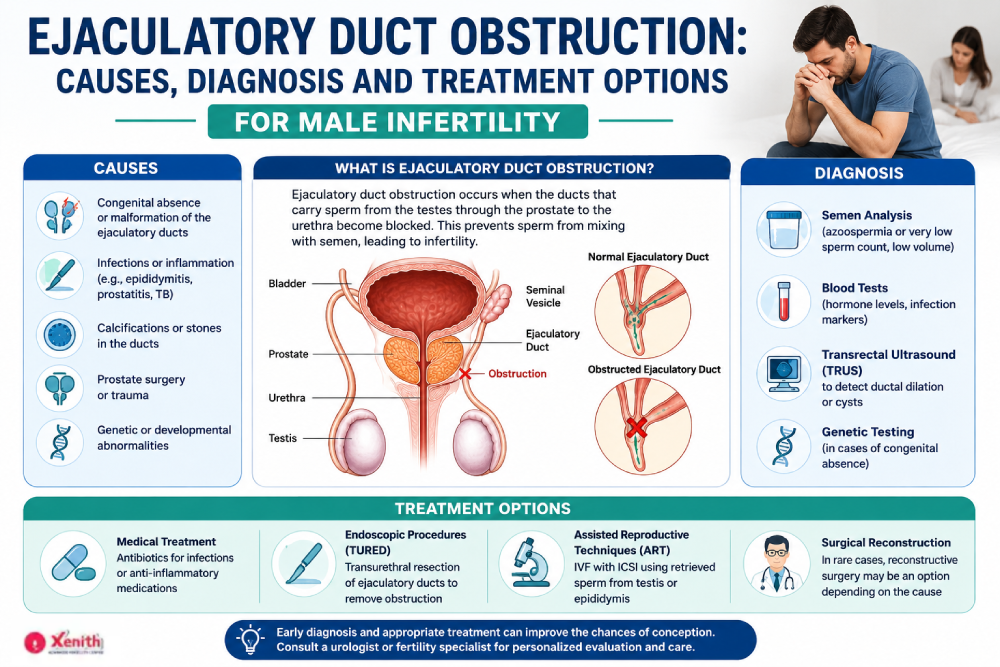
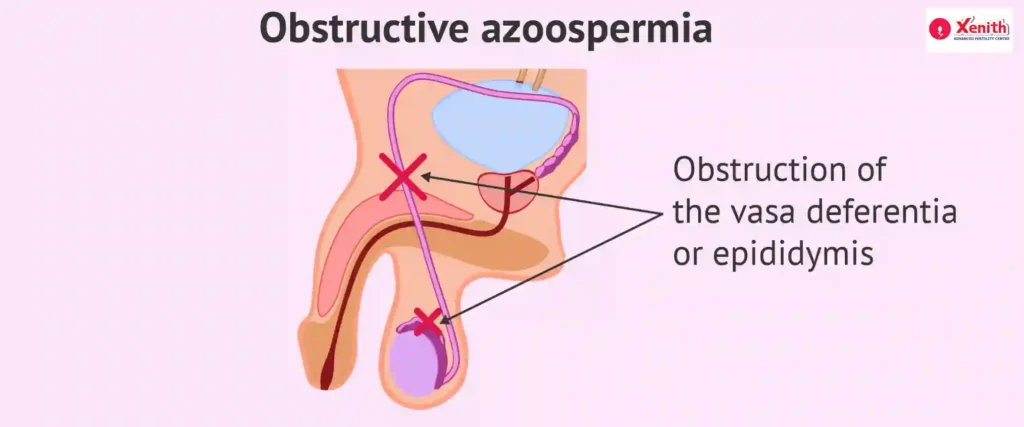
Ejaculatory Duct Obstruction (EDO) occurs when the ejaculatory ducts, the tubes that carry sperm and seminal fluid into the urethra, become blocked.
These ducts act like a pathway connecting the reproductive organs to the outside during ejaculation. When there is a blockage in this pathway, sperm cannot pass through properly.
Common effects of EDO include:
- Low semen volume
- Very low sperm count (oligozoospermia)
- No sperm in semen (azoospermia)
- Changes in semen composition
In simple terms, the sperm may be produced normally in the testicles, but they cannot reach the semen due to the blockage.
Why is EDO a Critical Factor in Male Infertility?
For natural conception to occur, sperm must travel through several structures and mix with seminal fluid before ejaculation.
When an obstruction occurs in the ejaculatory ducts:
- Sperm cannot mix with seminal fluid properly.
- The semen may appear normal but contain very few or no sperm.
- Fertility becomes difficult or impossible without treatment.
Because of this, EDO is classified as a form of obstructive azoospermia, where sperm production is normal but blocked from exiting the body.
The encouraging part is that many cases can be treated successfully, either through surgical correction or assisted reproductive techniques.
The Root Causes of Ejaculatory Duct Obstruction
EDO can occur due to different reasons. Some men are born with structural issues, while others develop blockages later in life.Doctors generally classify the causes into congenital (present from birth) and acquired (develop later).
Congenital Causes (Present at Birth)
Some men are born with structural abnormalities in the reproductive tract that cause obstruction.
Common congenital causes include:
- Prostatic utricle cysts or Müllerian duct cysts, which press on the ejaculatory ducts.
- Developmental abnormalities in the reproductive system.
- Abnormal formation of the seminal vesicles or ducts.
These conditions may remain unnoticed for years and are often discovered only when a couple faces difficulty conceiving.
Acquired Causes
In many cases, ejaculatory duct obstruction develops later due to infections, injuries, or other medical issues.
Some common acquired causes include:
- Infections or inflammation, such as prostatitis or epididymitis.
- Pelvic surgery or trauma, which may damage the ducts.
- Stones (calculi) that form inside the ejaculatory ducts.
- Scarring from previous infections.
Sometimes the blockage develops slowly, and symptoms may be subtle, making diagnosis slightly challenging.
The Diagnostic Roadmap
When a couple visits a fertility clinic in Pune for infertility evaluation, the diagnostic process usually starts with basic tests and gradually moves toward specialized imaging.
The goal is to identify whether the problem lies in sperm production or sperm transport.
Initial Steps: Semen Analysis and Medical History
The first and most important test is semen analysis.
This test provides valuable clues that may indicate ejaculatory duct obstruction.
A semen analysis may show:
- Low semen volume
- Low pH levels
- Absence of fructose in semen
- Very low or absent sperm count
Doctors also review the patient’s medical history, including past infections, surgeries, or symptoms such as painful ejaculation.
These findings help guide further diagnostic steps.
Transrectal Ultrasound (TRUS): The Gold Standard
One of the most reliable tools for diagnosing EDO is Transrectal Ultrasound (TRUS).
In this imaging test:
- A small ultrasound probe is placed in the rectum.
- The doctor can clearly visualize the ejaculatory ducts, seminal vesicles, and prostate.
TRUS helps identify:
- Dilated seminal vesicles
- Cysts or stones
- Blocked ejaculatory ducts
Because it is minimally invasive and highly accurate, TRUS is considered the gold standard imaging technique for diagnosing EDO.
Confirmatory Tests
If further confirmation is needed, doctors may recommend additional tests such as:
- Ductal contrast studies (vasography) to examine the duct pathways.
- Post-ejaculatory urine analysis to rule out retrograde ejaculation, where semen flows backward into the bladder.
These tests help confirm the diagnosis and guide the best treatment plan.
Advanced Treatment Options for EDO
Once the obstruction is confirmed, treatment depends on the severity of blockage and the couple’s fertility goals.
Options generally include surgical correction or assisted reproductive technology (ART).
The Primary Surgical Solution: Transurethral Resection of the Ejaculatory Ducts (TURED)
The most common surgical treatment for EDO is called Transurethral Resection of the Ejaculatory Ducts (TURED).
In simple terms:
- A small instrument is inserted through the urethra.
- The surgeon carefully removes the blockage or opens the obstructed duct.
- This allows sperm and seminal fluid to flow normally again.
TURED is a minimally invasive procedure and typically does not require large incisions.
Studies show that:
- Sperm return to semen in around 60–80% of patients
- Some couples can achieve natural conception after surgery
However, outcomes vary depending on the underlying cause and duration of the blockage.
Surgical Alternatives
In certain cases, doctors may consider other procedures such as:
- Ductal stenting
- Microsurgical correction techniques
These options are less common but may be useful in selected cases.
Assisted Reproductive Technology (ART) for EDO
If surgery is not successful or not suitable, assisted reproductive techniques provide another effective path to parenthood.
Doctors may perform surgical sperm retrieval procedures, such as:
- TESA (Testicular Sperm Aspiration)
- TESE (Testicular Sperm Extraction)
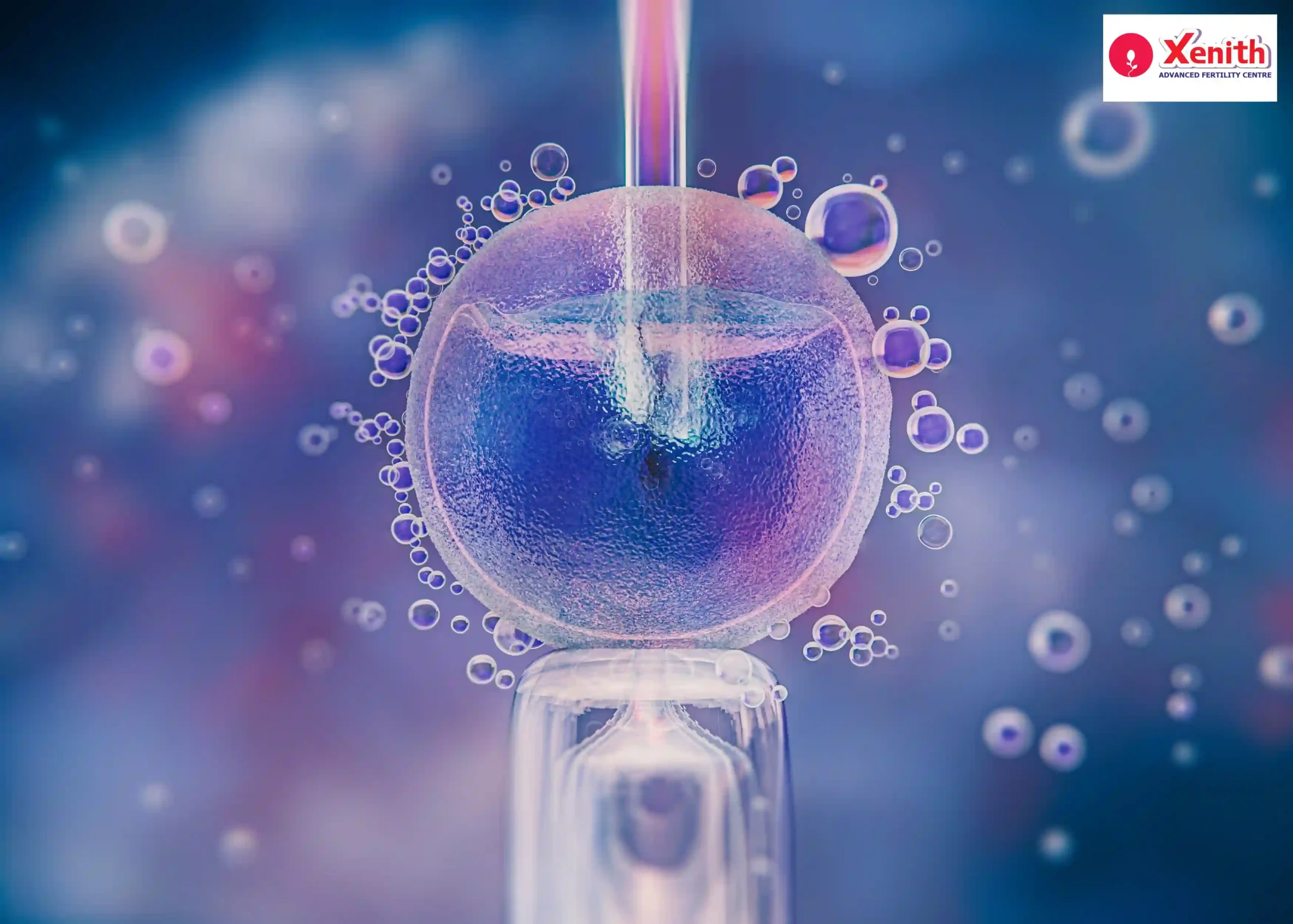
The retrieved sperm can then be used in IVF with ICSI (Intracytoplasmic Sperm Injection).
With ICSI, even a single healthy sperm can be injected directly into the egg, making fertilization possible.
For many couples facing azoospermia, this technique has opened new doors to achieving pregnancy.
Your Partner in Pune: Why Choose Xenith IVF
Choosing the right fertility clinic plays a major role in successful treatment. Managing male infertility conditions like EDO requires specialized expertise and coordinated care.
Specialized Male Fertility Team
At XenithIVF Pune, patients benefit from a collaborative approach.
Experienced urologists, andrologists, and IVF specialists work together to evaluate the condition and create a personalized treatment plan.
This ensures a smooth and coordinated journey, from diagnosis to treatment.
Post-TURED / Sperm Retrieval Protocol
Recovery and follow-up care are equally important.
Patients receive:
- Personalized pre-procedure guidance
- Nutritional support for sperm health
- Regular follow-up semen testing
- Fertility counseling
This comprehensive approach helps maximize treatment success.
EDO and the Indian Couple
For many Indian couples, azoospermia can bring emotional stress and social pressure.
Questions about cost, treatment success, and the possibility of natural conception are very common.
Doctors often discuss whether TURED surgery or direct IVF treatment is the better option based on the patient’s condition and fertility goals.
Clear counseling helps couples make informed and confident decisions about their fertility journey.
FAQs: Common Questions on Ejaculatory Duct Obstruction
No. A vasectomy is an intentional surgical procedure used for permanent contraception. Ejaculatory duct obstruction is a natural or acquired blockage that occurs due to medical reasons and may be treatable.
In many cases, sperm returns to the semen in 60–80% of patients after TURED surgery. Natural conception may occur, although success rates vary depending on individual factors.
If surgery does not restore sperm flow, IVF with surgical sperm retrieval (TESA or TESE) is usually the most effective treatment option.
Recovery is usually quick. Most patients resume normal activities within a few days to a week, and a follow-up semen analysis is typically performed around 6–8 weeks after surgery.
Conclusion: Taking the Next Step
Ejaculatory Duct Obstruction may sound complex, but it is important to remember that it is a treatable condition. With modern diagnostic tools and advanced treatment options, many men with EDO can still achieve fatherhood.
Early evaluation, accurate diagnosis, and expert medical care can make a significant difference.
Ready to explore your path to parenthood?
Schedule a private consultation with our male fertility specialists at Xenith IVF, Pune and take the first step toward building your family.