How to Increase Sperm Thickness: Does Semen Viscosity Really Affect Fertility?
One of the more unusual, but surprisingly common, questions I hear from men is, “Doctor, my semen seems too thin. Is that why we aren’t conceiving?” Others worry because their semen appears unusually thick and wonder if that means they have a higher sperm count.

Free Thursday Consultation
Book Your AppointmentThese concerns are understandable. Many people observe changes in semen consistency and immediately assume they reflect fertility. However, one of the first things I explain during consultations is that the appearance or thickness of semen alone does not tell us how fertile a man is.
Over the years, I have met men who were convinced they had poor fertility because their semen looked watery, only to discover that their semen analysis was completely normal. On the other hand, I have also seen men with thick semen who had reduced sperm motility because the semen was excessively viscous. This is why self-observation can only tell us so much.
If you have been searching for how to increase sperm thickness, it is important to first understand what semen viscosity actually means and when it truly matters for fertility.
What Is Semen Viscosity?
Semen is a mixture of sperm cells and fluids produced by the prostate, seminal vesicles, and other reproductive glands. The thickness of this fluid is known as semen viscosity.
Immediately after ejaculation, semen is normally thick and gel-like. This helps it remain inside the female reproductive tract. Within a short period, natural enzymes begin to break down the gel, allowing the semen to become more fluid. This process is called liquefaction.
According to the World Health Organization (WHO), semen viscosity is considered normal when liquefaction occurs within about 15 to 60 minutes after ejaculation. Once liquefied, sperm can move more freely towards the egg.
When I explain this to patients, many are relieved to learn that semen is supposed to change consistency after ejaculation. What matters is whether this process happens normally.
Thick vs Thin Semen: Does It Affect Fertility?
A common misconception is that thick semen means a higher sperm count and thin semen means poor fertility. In reality, thick vs thin semen fertility is not nearly as straightforward.
A man can have:
- Thick semen with an excellent sperm count.
- Thin semen with completely normal fertility.
- Thick semen with poor sperm movement.
- Thin semen with low sperm count.
In other words, semen consistency by itself cannot determine fertility. This is why I always encourage couples not to rely on visual appearance. Fertility depends on several factors, including sperm count, motility, morphology, DNA quality, and overall reproductive health, not simply how thick the semen appears.
What Causes Thick or Thin Semen?
There are several reasons why semen consistency may vary from one individual to another, or even from one day to the next.
Hydration
One of the simplest reasons for thicker semen is dehydration. I often ask my patients about their daily water intake because inadequate hydration can make various body fluids more concentrated, including semen.
Frequency of ejaculation
The interval between ejaculations also affects semen consistency. After several days of abstinence, semen often appears thicker and the volume may be greater. Conversely, frequent ejaculation may produce semen that appears thinner because the reproductive glands have had less time to replenish their secretions. This is a completely normal physiological variation.
Infection or inflammation
Occasionally, unusually thick semen may be associated with infection or inflammation of the prostate or other parts of the reproductive tract. Men who notice persistent changes along with pain, fever, burning during urination, or blood in the semen should seek medical evaluation rather than attempting self-treatment.
Hormonal factors
Hormonal imbalances can influence semen production and overall reproductive health. Although they are not the most common cause of altered viscosity, they are considered when evaluating male infertility.
Low semen volume causes
Sometimes the concern is not just thickness but the amount of semen produced. Some low semen volume causes include:
- Frequent ejaculation
- Partial blockage of the reproductive ducts
- Hormonal disorders
- Certain medications
- Previous surgery
- Problems affecting the seminal vesicles or prostate
A detailed medical history and semen analysis help identify whether any of these factors are contributing.
When Does Semen Viscosity Actually Affect Fertility?
This is where viscosity becomes clinically important. Most differences in semen consistency are harmless. However, abnormally high semen viscosity, sometimes called semen hyperviscosity, can interfere with sperm movement. Reduced sperm movement may decrease the chances of sperm reaching the egg naturally. In such situations, semen viscosity becomes one of several findings we consider while investigating infertility.
Importantly, hyperviscosity does not automatically mean a man is infertile. It simply indicates that further evaluation may be helpful to identify the underlying cause and determine the most appropriate treatment.
How to Increase Sperm Thickness the Healthy Way
Many online articles promise quick ways to change semen consistency, but I encourage my patients to focus on improving overall reproductive health rather than chasing a particular appearance.
If you are searching for how to increase sperm thickness, these measures may help support healthy semen production:
- Stay well hydrated throughout the day.
- Eat a balanced diet containing adequate zinc and other essential nutrients.
- Avoid smoking and excessive alcohol consumption.
- Maintain a healthy body weight.
- Avoid unnecessary overheating of the testes.
- Allow reasonable intervals between ejaculations if you notice consistently very low semen volume.
- Seek treatment promptly if an infection is diagnosed.
It is equally important not to take supplements indiscriminately. While antioxidants and minerals may benefit some men, they should ideally be recommended after assessing your overall health and fertility profile. I often remind couples that fertility is about healthy sperm, not simply thicker semen.
When Should You Stop Self-Diagnosing?
One of the biggest challenges I see is the anxiety created by internet searches. A man notices a change in semen consistency once or twice, reads several online articles, and becomes convinced he has infertility. By the time he reaches my clinic, he is often carrying unnecessary stress.
The reality is that semen appearance varies naturally. If you have been trying to conceive without success, or if you have persistent concerns about semen consistency, the most reliable next step is not another online search, it is a semen analysis.
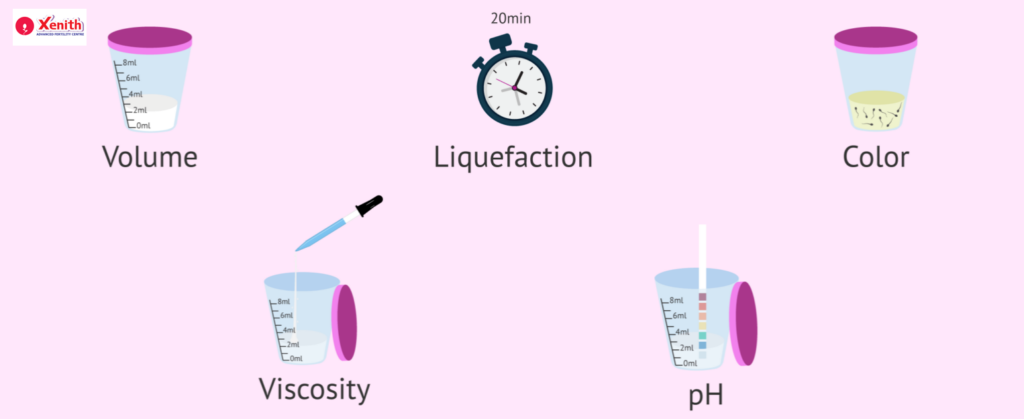
A laboratory semen analysis evaluates:
- Sperm count
- Motility
- Morphology
- Semen volume
- Liquefaction
- Viscosity
- Other important fertility parameters
These results provide far more meaningful information than visual observation alone.
Final Thoughts
If there is one message I want every man to remember, it is this: semen consistency and fertility are not the same thing. While semen viscosity is one part of a fertility evaluation, thicker semen does not automatically mean better fertility, and thinner semen does not necessarily indicate a problem. What matters is whether sperm can move effectively and whether the semen liquefies normally after ejaculation.
Throughout my years of caring for couples, I have found that accurate testing is far more valuable than assumptions based on appearance. Understanding your fertility begins with reliable information, not guesswork.
At Xenith, we offer comprehensive semen analysis as part of a complete male fertility assessment. If you are concerned about semen thickness, low semen volume, or have been trying to conceive without success, we are here to help you identify the underlying cause and guide you towards the most appropriate treatment with confidence and clarity.