One of the concerns I hear most often when I explain IVF injections to my patients is, “Doctor, will the injections make my ovaries swell too much?”
It’s an understandable concern. During IVF stimulation, we deliberately encourage the ovaries to develop multiple follicles, so it is natural to wonder where the line is between a normal response and an excessive one. The condition we are watching for is called ovarian hyperstimulation syndrome (OHSS).
Free Thursday Consultation
Book Your AppointmentThe good news is that IVF has changed considerably over the years. We now have better ways of identifying women who are at higher risk and several strategies that allow us to significantly reduce the likelihood of severe OHSS. I want my patients to understand both sides of the story: OHSS is a real complication that deserves attention, but modern IVF is designed to anticipate and prevent it wherever possible.
What Is Ovarian Hyperstimulation Syndrome?
Ovarian hyperstimulation syndrome is a complication of fertility treatment in which the ovaries respond excessively to stimulation medication. As multiple follicles develop, the ovaries become enlarged. In some women, hormonal and vascular changes can cause fluid to move from the bloodstream into the abdominal cavity.This can lead to symptoms ranging from mild abdominal bloating and discomfort to, in more serious cases, significant fluid accumulation,

dehydration, blood-clotting problems, and breathing difficulties.
OHSS can occur around the time of the trigger injection and egg retrieval, but symptoms may also develop or worsen after pregnancy occurs because pregnancy hormone (hCG) can stimulate the ovaries further. This is why OHSS after egg retrieval requires attention even if you felt completely well immediately after the procedure.
Mild, Moderate, and Severe OHSS: What Does It Actually Feel Like?
OHSS exists on a spectrum. Not every woman who develops ovarian hyperstimulation becomes seriously ill.
Mild OHSS
Mild OHSS can feel similar to some of the ordinary effects of ovarian stimulation.
You may experience:
- Abdominal bloating
- Mild abdominal discomfort
- A feeling of fullness
- Mild nausea
- Slight weight gain
Some bloating after IVF injections is expected, particularly as the ovaries enlarge during stimulation. Mild symptoms usually improve with observation and supportive care.
Moderate OHSS
With moderate OHSS, the symptoms become more noticeable.
You may experience:
- Increasing abdominal swelling or discomfort
- More significant nausea or vomiting
- Noticeable weight gain
- Increasing fluid accumulation in the abdomen
At this stage, I would want you to contact your fertility team so that we can assess you rather than simply assuming the symptoms are part of a normal IVF cycle.
Severe OHSS
Severe OHSS is uncommon but potentially serious.
Symptoms can include:
- Significant abdominal swelling and pain
- Persistent vomiting
- Marked dehydration
- Reduced urine output
- Difficulty breathing
- Rapid weight gain
This is why I don’t want patients to judge the severity of OHSS based on

bloating alone.
Red-Flag Symptoms: When to Call the Clinic Immediately
If you’re undergoing IVF and develop any of the following, contact your fertility clinic promptly or seek urgent medical assessment according to your clinic’s instructions:
- Rapid or significant weight gain
- Severe or worsening abdominal pain or swelling
- Persistent vomiting or inability to keep fluids down
- Very little urine or a marked reduction in urine output
- Difficulty breathing or chest discomfort
- Severe dizziness, fainting, or extreme weakness
- Significant abdominal distension
- Symptoms that are rapidly getting worse
These symptoms should not be managed by simply waiting at home. If you are ever unsure, I would much rather you call us and let us assess you than spend the night worrying about whether a symptom is “normal.”
Who Is Most at Risk of OHSS?
Not every woman undergoing IVF has the same risk. Some patients are naturally more sensitive to ovarian stimulation.
The risk is particularly higher in women with:
PCOS
Women with polycystic ovary syndrome (PCOS) often have a larger number of small antral follicles. When stimulated, many of these follicles can respond simultaneously.
High AMH
A high AMH (anti-Müllerian hormone) level is associated with a larger ovarian reserve and can help predict an increased response to stimulation.
High AFC
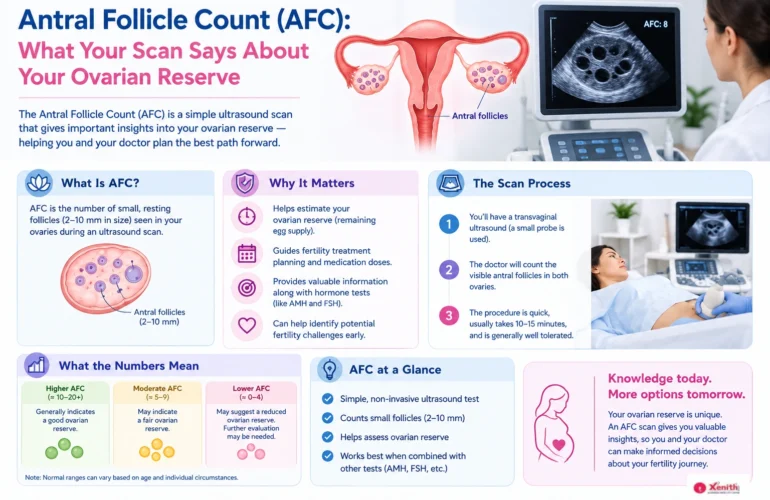
A high antral follicle count (AFC) is another important indicator of potential ovarian over-response. This is one reason I assess ovarian reserve before deciding on an IVF stimulation protocol.
Younger Age
Younger women can sometimes have a stronger ovarian response to stimulation, particularly when combined with high ovarian reserve markers.
A woman doesn’t need to have all these factors to develop OHSS, and having one of them does not mean she will definitely develop the condition. The purpose of identifying these risk factors is to allow us to adapt the treatment before excessive stimulation occurs.
How Have Modern IVF Protocols Made Severe OHSS Less Common?
One of the biggest changes in IVF has been moving away from a “one protocol fits everyone” approach. We now have several ways of tailoring stimulation and trigger strategies according to the woman’s ovarian reserve and predicted response.
Antagonist Protocols and the GnRH Agonist Trigger
An antagonist protocol is one of the commonly used IVF approaches and can be particularly useful when OHSS risk is a concern. In women at high risk, a GnRH agonist trigger can be used instead of the traditional hCG trigger in appropriate circumstances. This can substantially reduce the risk of clinically significant OHSS because it avoids prolonged exposure to hCG, which plays an important role in the development and worsening of OHSS.
Current fertility guidelines and reviews support GnRH antagonist protocols with an agonist trigger as an important strategy for reducing OHSS risk in appropriate patients. The exact trigger strategy still needs to be selected based on the individual treatment plan.
The Freeze-All Strategy
Another important development is the option of freezing embryos rather than transferring a fresh embryo immediately.
Why can this help?
If a woman is at high risk of OHSS, avoiding an immediate pregnancy can prevent pregnancy-related hCG from worsening or prolonging the syndrome. Instead, embryos can be frozen and transferred later, once the ovaries have settled and the body has returned to its baseline state. This is known as a freeze-all strategy.
Importantly, freeze-all is not necessarily needed for every IVF patient. It is one of the strategies we may consider when the risk-benefit assessment makes it appropriate.
Lower-Drug Approaches, Including IVM
In carefully selected patients, approaches that involve less ovarian stimulation may also be considered. One such approach is in-vitro maturation (IVM), in which immature eggs are collected and matured in the laboratory rather than relying on conventional stimulation to mature multiple follicles completely inside the ovary.
IVM can be particularly relevant to certain patients with a very high ovarian reserve or PCOS, although it is not a replacement for conventional IVF in every patient.
The important principle is that the treatment should be matched to the patient rather than simply maximizing the number of eggs.
What Can You Do at Home If You Have Mild Symptoms?
Some bloating and abdominal discomfort can occur during a normal IVF cycle, and mild symptoms may settle with observation. If your fertility team has advised you to monitor at home, a few practical measures can help:
- Stay adequately hydrated: Follow your clinic’s advice about fluid intake rather than forcing excessive amounts.
- Monitor your symptoms: Pay attention to whether your abdominal swelling, pain, nausea, or general wellbeing is improving or worsening.
- Follow your medication instructions: Do not start, stop, or change prescribed medications without speaking to your fertility team.
- Keep track of your weight if instructed: A rapid increase can provide useful information about fluid accumulation.
- Avoid strenuous activity if your ovaries are significantly enlarged: Your team can advise you about appropriate activity levels during stimulation and after retrieval.
Most importantly, don’t try to diagnose the severity of OHSS yourself. If symptoms are worsening, contact your clinic.
What Does Xenith Monitor During Your Stimulation Cycle?
When I monitor an IVF cycle, I’m not looking only at how many follicles are developing. I’m also asking: How is the patient responding to those follicles?
During stimulation, monitoring may include ultrasound assessment of follicle development and blood tests when clinically indicated. We use this information to understand how the ovaries are responding and whether medication doses or the timing and type of trigger need to be adjusted.
For a patient with high ovarian reserve, the goal is not to see how many follicles we can stimulate. The goal is to achieve an effective response while keeping the treatment as safe as possible. If the response becomes higher than expected, we can modify the treatment strategy rather than waiting for significant symptoms to develop. This is one of the reasons monitoring is such an important part of IVF.
Frequently Asked Questions
Is some bloating after IVF injections normal?
Yes. Mild bloating and abdominal fullness can occur as the ovaries enlarge during stimulation. However, rapidly worsening swelling, severe pain, vomiting, reduced urination, breathing difficulty, or rapid weight gain requires medical assessment.
When does OHSS usually happen?
OHSS can develop around the time of the trigger and egg retrieval, and symptoms can worsen in an early pregnancy because rising hCG can stimulate the ovaries further.
Can OHSS happen after egg retrieval?
Yes. OHSS after egg retrieval can occur, and symptoms may appear or become more pronounced in the days following retrieval. This is why monitoring does not necessarily end immediately after the procedure.
Is OHSS dangerous?
Mild OHSS is usually self-limiting, but severe OHSS can be serious and may require hospitalization. The important thing is to recognize worsening symptoms early.
Who is most likely to develop OHSS?
Women with PCOS, high AMH, high AFC, and a strong ovarian response are at increased risk. Younger women may also be at higher risk in some circumstances.
Can OHSS be prevented?
The risk can often be substantially reduced through individualized stimulation, careful monitoring, appropriate trigger selection, and strategies such as a freeze-all approach when indicated. No strategy can guarantee that OHSS will never occur.
Does the antagonist protocol prevent OHSS?
An antagonist protocol itself does not guarantee that OHSS will not occur. However, GnRH antagonist protocols allow the use of a GnRH agonist trigger in appropriate high-risk patients, which is an important OHSS-reduction strategy.
Does everyone with PCOS get OHSS during IVF?
No. PCOS increases the risk, but careful protocol selection and monitoring can substantially reduce that risk.
Should I stop IVF medication if I develop bloating?
No. Do not change or stop prescribed IVF medication without speaking with your fertility team. Your doctor may need to assess you and decide whether any changes are appropriate.
Final Thoughts
I never want my patients to begin IVF believing that complications such as ovarian hyperstimulation syndrome are simply something they have to accept. Modern IVF gives us several tools to reduce the risk.
Before stimulation begins, we can assess factors such as AMH, AFC, age, and previous ovarian response. During treatment, ultrasound and clinical monitoring help us understand how the ovaries are responding. When appropriate, we can use antagonist protocols, a GnRH agonist trigger, or a freeze-all approach to reduce the likelihood of significant OHSS.
At the same time, I want every patient to recognize the warning signs. Mild bloating can be part of IVF. Rapidly worsening abdominal swelling, severe pain, persistent vomiting, reduced urine output, breathing difficulty, or rapid weight gain is different and should be reported promptly.
If you’re starting IVF and are worried about OHSS, please bring those concerns to your consultation. At Xenith, we can assess your individual risk before stimulation begins and choose a treatment strategy designed around both your fertility goals and your safety.