
Trying to conceive can be an emotional journey. Many couples start with hope and excitement, but when pregnancy doesn’t happen after months of trying, questions and worries naturally arise. In such situations, doctors often recommend a few basic fertility tests to understand what might be happening inside the body.
One of the most important tests in female fertility evaluation is the Hysterosalpingogram (HSG). In simple terms, an HSG test is a special type of X-ray that helps doctors see the inside of the uterus and fallopian tubes. It helps identify whether the fallopian tubes are open or blocked and whether the uterus has any structural issues.

Free Thursday Consultation
Book Your AppointmentThe HSG test plays a very important role in diagnosing tubal factor infertility, which is one of the common causes of difficulty in getting pregnant. The good news is that once the exact problem is identified, doctors can suggest the right treatment path, whether that is medication, surgery, or advanced treatments like IVF.
Let’s understand this test in a simple and clear way.
Why Fallopian Tubes Matter
Many people focus only on the ovaries and uterus when thinking about fertility. But the fallopian tubes are equally important for natural conception.
In a healthy reproductive system, fallopian tubes perform three key roles:
- Catching the egg: After ovulation, the fallopian tubes gently capture the egg released from the ovary.
- Fertilization site: This is where the sperm meets the egg and fertilization usually happens.
- Transport to the uterus: Once fertilization occurs, the early embryo travels through the tube and reaches the uterus for implantation.
If the fallopian tubes are blocked, damaged, or swollen, sperm and egg cannot meet. This makes natural pregnancy difficult or sometimes impossible.
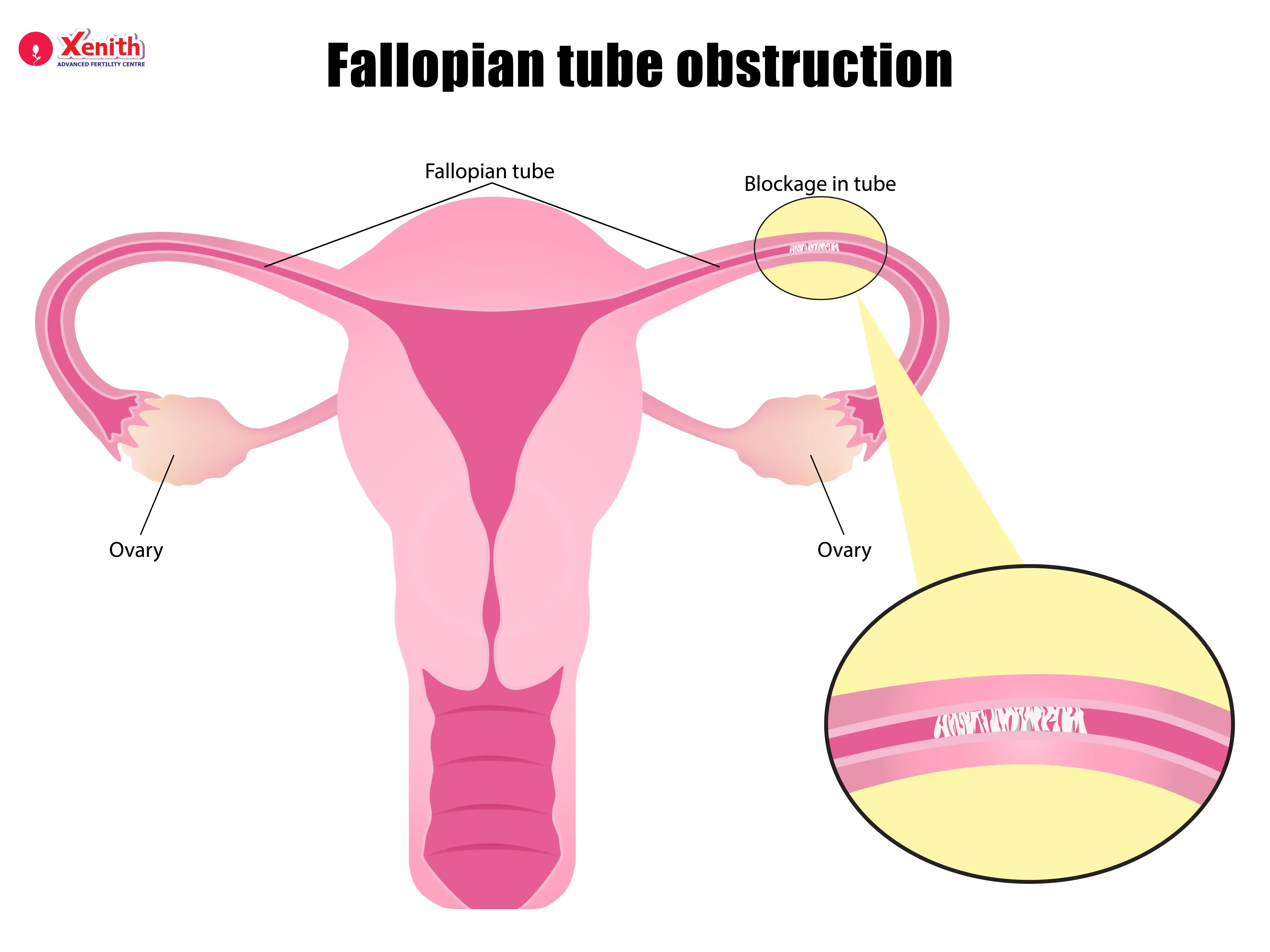
This is exactly why the HSG test is so valuable. It shows whether these tubes are open and functioning properly.
When Your Doctor Recommends an HSG
Doctors usually suggest an HSG test as part of a standard infertility evaluation.
Typically, it is recommended when:
- A couple has been trying to conceive for 6–12 months without success.
- The woman has irregular periods or pelvic infections in the past.
- There is a suspicion of tubal blockage or uterine abnormalities.
- The doctor wants a complete fertility assessment before starting treatments like IVF or IUI.
In many fertility clinics, including those in Pune, the HSG test is considered one of the first-line diagnostic tests before moving to advanced fertility treatments.
The main aim is simple: understand the cause so the right treatment can begin sooner.
The HSG Procedure Explained Step-by-Step
Many women feel nervous when they hear about the HSG test. However, knowing what actually happens during the procedure can make the experience much less stressful.
The test is short, simple, and usually done as an outpatient procedure. This means you can go home the same day.
Timing and Preparation for the Test
The HSG test is usually scheduled between Day 6 and Day 12 of the menstrual cycle. This timing is important for two reasons:
- It ensures that the woman is not pregnant.
- The uterine lining is thin at this time, making the images clearer.
Before the procedure, your doctor may suggest:
- Taking a mild pain reliever about 30–60 minutes before the test.
- Avoiding sexual intercourse for a few days before the test.
- Informing the doctor if you have allergies to contrast dyes or iodine.
In most cases, no special fasting or hospital admission is required.
What to Expect During the Procedure
The HSG test typically takes 10–20 minutes. Here is what happens step by step:
- Lying on the X-ray table: You will lie down similar to a regular gynecological examination.
- Speculum insertion: A speculum is gently inserted into the vagina so the doctor can see the cervix clearly.
- Cleaning the cervix: The cervix is cleaned with an antiseptic solution to reduce infection risk.
- Injection of contrast dye: A thin tube (catheter) is placed through the cervix and a special contrast dye is slowly injected into the uterus.
- X-ray imaging: As the dye flows through the uterus and fallopian tubes, X-ray images are taken.
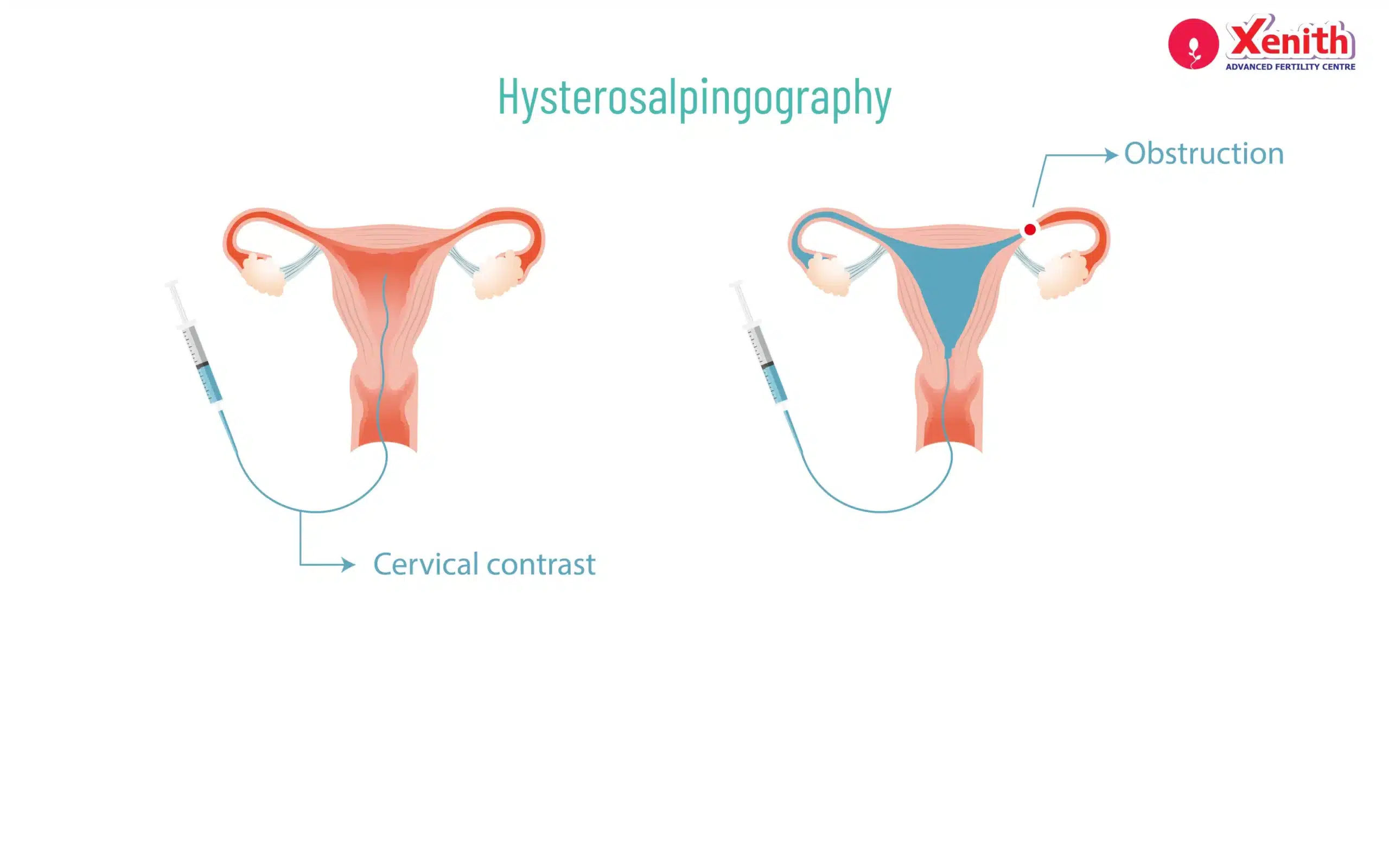
If the tubes are open, the dye flows through them and spills into the pelvic cavity. This spill is what doctors look for in the images.
Addressing Patient Concerns: Pain and Cost
Two of the most common questions patients ask about the HSG test are about pain and cost. Let’s talk about both honestly and clearly.
Understanding the Discomfort
Many women worry about whether the HSG test will be painful.
The truth is that the test may cause some discomfort, but it is usually short and manageable.
Most women describe the sensation as:
- Cramping similar to strong menstrual pain
- Pressure in the lower abdomen when the dye is injected
This discomfort usually lasts only a few minutes. Once the dye stops flowing, the cramps typically reduce quickly.
Doctors often recommend taking a painkiller beforehand, which helps reduce the cramping.
The important thing to remember is that the pain is temporary, but the diagnostic information gained from the test is extremely valuable for fertility treatment.
HSG Test Cost in Pune
The HSG test cost in Pune can vary depending on several factors, such as:
- The diagnostic center or fertility clinic
- The type of imaging equipment used
- Whether consultation charges are included
In general, the cost may range between ₹3,000 to ₹8,000 in many diagnostic centers.
However, the best way to know the exact cost is to contact the clinic directly. Reputable IVF clinics usually provide transparent pricing and proper guidance before scheduling the test.
Interpreting the HSG Test Results
Once the test is completed, the doctor studies the X-ray images to understand how the dye moved inside the uterus and fallopian tubes.
The way the dye flows gives important clues about fertility.
The Best Result: Tubal Patency
The ideal result in an HSG test is called tubal patency, which means the tubes are open.
On the X-ray image, this looks like:
- Dye filling the uterus normally
- Dye traveling smoothly through both fallopian tubes
- Dye spilling freely into the pelvic cavity
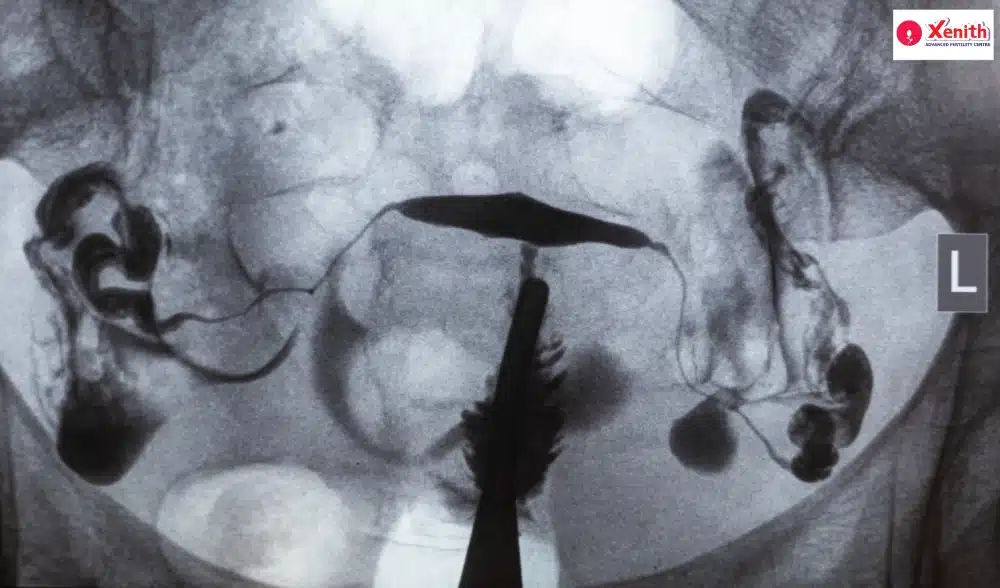
This confirms that sperm and egg have a clear pathway to meet, which is essential for natural conception
Understanding Blockages and Adhesions
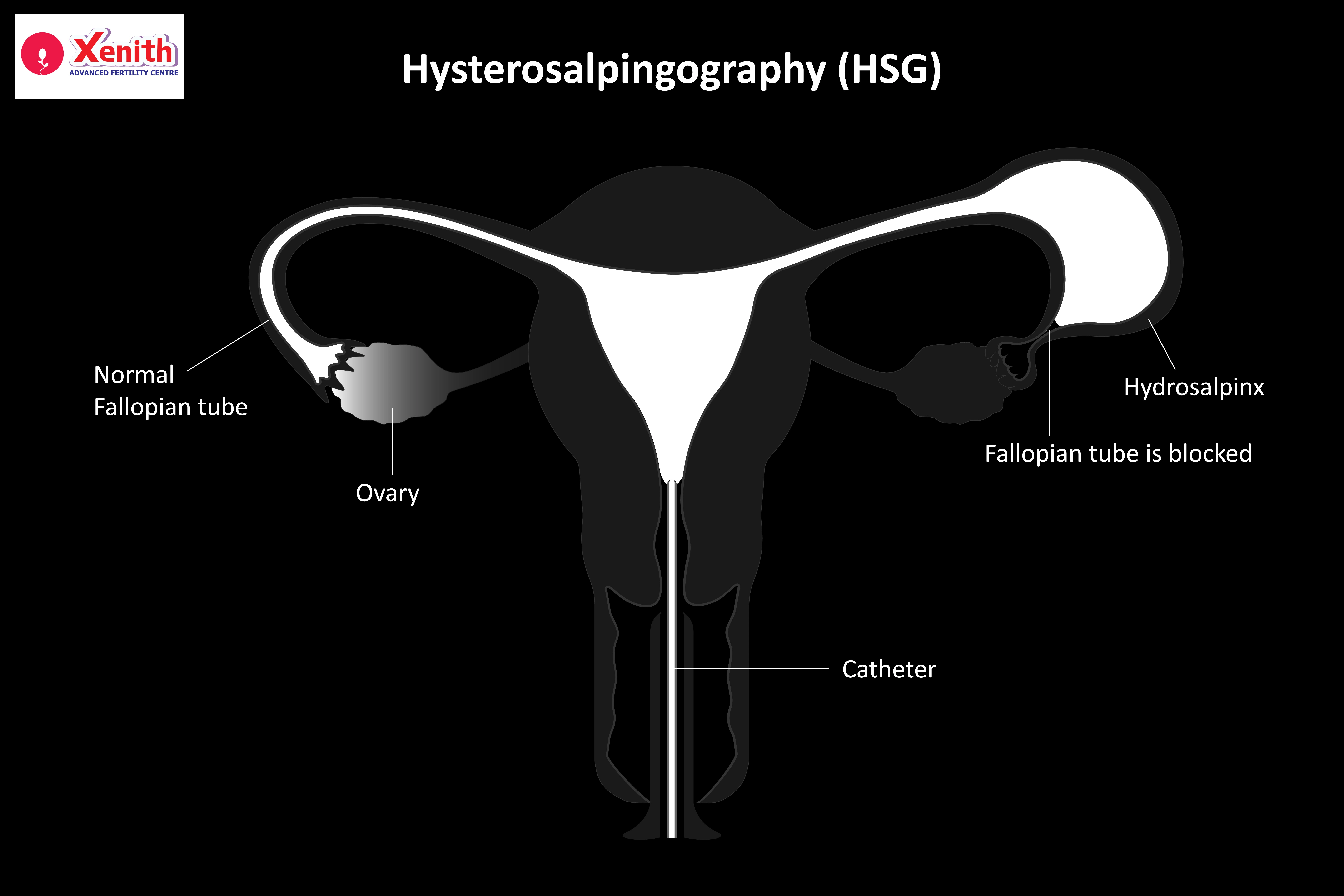
Sometimes the dye does not pass through the tubes completely. This indicates a blockage.
Doctors usually identify the location of the blockage:
- Proximal Blockage:
The blockage occurs near the uterus where the tube begins. - Distal Blockage:
The blockage is near the ovary at the end of the tube. - Hydrosalpinx:
This is when the tube becomes swollen and filled with fluid, often due to past infection. Hydrosalpinx can reduce fertility and sometimes affects IVF success.
Understanding the exact location helps doctors decide the most suitable treatment plan.
Next Steps After Diagnosis
If the HSG test shows abnormalities, your doctor will discuss the next options.
These may include:
- Laparoscopy: A minimally invasive surgery to confirm and treat tubal issues.
- Tubal repair procedures in some cases.
- IVF (In Vitro Fertilization) when tubes are severely damaged or blocked.
The key point is that the HSG test provides clear diagnostic direction, which helps avoid unnecessary delays in treatment.
FAQs: Common Questions on the HSG Test
Q1. Are there any risks or side effects?
The HSG test is generally very safe. Some minor side effects may occur, such as:
Light spotting
Mild cramping
Watery discharge after the dye
Serious complications like infection or allergic reaction to the dye are rare, but doctors take precautions to minimize risks.
Q2. Is there a “fertility boost”after an HSG?
Interestingly, some women conceive naturally in the months immediately after an HSG test.
Doctors believe this may happen due to a “flushing effect,” where the dye clears small mucus plugs or debris inside the tubes.
While this is not guaranteed, studies and patient experiences suggest a slight improvement in fertility in the cycles following the test, especially when oil-based dye is used.
Q3. How quickly can I resume normal activities?
Most women can resume normal activities immediately after the procedure.
You can usually return to work the same day.
Light spotting may occur for a day.
Sexual activity can be resumed once you feel comfortable, often within 1 – 2 days.
Conclusion: Your Clear Path to Conception Begins Here
The HSG test may sound intimidating at first, but in reality it is a simple, quick, and highly informative fertility test. By showing whether the uterus and fallopian tubes are healthy, it provides doctors with crucial information needed to plan the next steps in your fertility journey.
For many couples, this test becomes the turning point that leads to the right diagnosis and effective treatment. If you have been trying to conceive without success or your doctor has recommended an HSG test, it is important not to delay evaluation.
Schedule a confidential consultation with our fertility experts at Xenith IVF Pune today. Our experienced team will guide you through every step, from diagnosis to personalized treatment, helping you move closer to your dream of parenthood.