

Introduction
Many couples today are trying to conceive, but despite all reports coming “normal,” pregnancy does not happen. This situation can feel confusing and emotionally draining. One such often overlooked reason is luteal phase defect infertility. It is not very commonly discussed, but it plays a very important role in pregnancy.
The luteal phase defect (LPD) affects the uterus’s ability to support implantation of the embryo. Even if fertilization happens, the pregnancy may not continue properly.

Free Thursday Consultation
Book Your AppointmentThe good news is if detected early it can be treated, and chances of pregnancy can improve significantly.
What Is the Luteal Phase?
To understand LPD, we first need to understand what the luteal phase is.
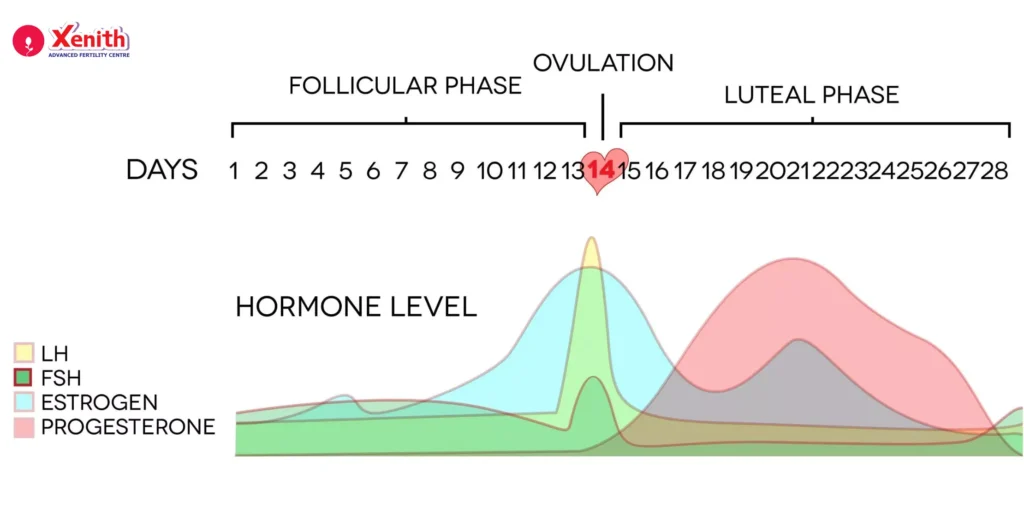
The menstrual cycle has different phases, and the luteal phase is the time after ovulation (when the egg is released).
- It usually lasts 12–14 days
- After ovulation, the body produces a hormone called progesterone
- Progesterone prepares the uterus lining (endometrium) for implantation
Think of it like preparing a soft bed for the embryo. If the bed is not ready, implantation becomes difficult.
This phase is a critical window for pregnancy. If everything is balanced, implantation happens smoothly.
What Is Luteal Phase Defect (LPD)?
Luteal phase defect infertility happens when this phase does not function properly.
This can occur in two main ways:
- The luteal phase is too short (short luteal phase fertility issue)
- The body produces less progesterone than needed
Because of this:
- The uterine lining does not develop properly
- The embryo cannot implant properly
- It may lead to early pregnancy loss
Causes of Luteal Phase Defect
There are several reasons why LPD can happen. Often, it is due to hormonal imbalance.
Common causes include:
- Hormonal imbalance – body is not producing the right signals
- Poor ovulation quality – egg release is weak or irregular
- Low progesterone levels (low progesterone infertility)
- Thyroid disorders – both hypo and hyperthyroidism affect hormones
- High prolactin levels – can disturb ovulation

- Stress and lifestyle factors – lack of sleep, anxiety, poor diet
In today’s fast life, stress (tension) plays a big role. Even small hormonal changes can affect fertility.
Symptoms of Luteal Phase Defect
One tricky part is that LPD symptoms are often mild and easy to ignore.
Common luteal phase defect symptoms include:
- Short menstrual cycles (less than 26 days)
- Spotting before periods
- Difficulty conceiving
- Early miscarriages
- Irregular ovulation
Many women think spotting is normal or ignore short cycles. But these can be important signals from your body.
How LPD Affects Fertility
Now the important question is how does this actually affect pregnancy?
- The endometrial lining becomes weak
- Embryo cannot attach properly
- Implantation fails
- Risk of early pregnancy loss increases
Even if fertilization happens, the pregnancy may not continue.
So, it’s not just about egg and sperm meeting, it’s also about the environment inside the uterus.
Diagnosis at Xenith IVF
If you suspect LPD, proper diagnosis is very important.
At Xenith IVF, doctors usually follow a step-by-step approach:
- Tracking ovulation cycle
- Progesterone level testing
- Ultrasound scans to check uterine lining
- Hormonal profile evaluation
These tests help understand whether the luteal phase length is normal and if progesterone levels are sufficient.
A normal luteal phase length is typically around 12–14 days. Anything shorter may need attention.
Treatment Options
The good part is luteal phase defect treatment is possible and often effective.
Medical Treatment
Doctors may suggest:
- Progesterone supplementation
- Ovulation induction medications
- Hormonal therapy
These treatments help support the uterine lining and improve implantation chances.

Lifestyle Management
Along with medicines, lifestyle also matters a lot:
- Reduce stress
- Eat a balanced, healthy diet
- Maintain a regular sleep cycle
- Avoid excessive caffeine and junk food

Small changes can make a big difference in hormonal balance.
Can Luteal Phase Defect Be Treated Successfully?
Yes, in most cases, LPD can be treated successfully.
With proper hormonal support:
- Uterine lining improves
- Implantation becomes easier
- Pregnancy chances increase
Early diagnosis is the key. The sooner you identify the issue, the better the outcome.
When Should You See a Fertility Specialist?
You should consult a specialist if you notice:
- Difficulty conceiving after trying for some time
- Recurrent early miscarriages
- Irregular menstrual cycles
- Signs of hormonal imbalance
Why Choose Xenith IVF
Choosing the right fertility center makes a big difference.
Xenith IVF offers:
- Advanced hormone testing
- Personalized treatment plans
- Experienced fertility specialists
- High success rate care

Every couple’s journey is different, and treatment is customized accordingly.
FAQs
It is a condition where the luteal phase is too short or progesterone levels are low, making it difficult for the embryo to implant.
A normal luteal phase length is around 12–14 days.
Yes, low progesterone infertility is a major factor, as it affects the uterine lining needed for implantation.
It is treated with progesterone supplements, hormonal therapy, and ovulation support medications.
Yes, with proper treatment and care, many women with LPD successfully conceive.
Conclusion
Luteal phase defect infertility is a hidden but important cause of infertility. Many couples struggle without knowing the exact reason, and LPD could be one of them. Hormonal balance, especially progesterone, plays a key role in successful implantation and pregnancy.
The good news is that with early diagnosis and the right treatment, pregnancy outcomes can improve significantly. If you are facing difficulty conceiving, don’t ignore the signs. Understanding your body is the first step toward your parenthood journey.
Book your consultation with Xenith IVF today and take the first step toward a healthy and successful pregnancy.