If you’re about to begin an IVF cycle, there’s a good chance the injections are what you’re worried about the most. In fact, one of the first things many of my patients say during their treatment planning appointment is, “Doctor, I’m afraid of needles.” Some tell me they’ve never given themselves an injection before, while others are anxious about doing something incorrectly.
I completely understand those concerns. The good news is that after a few days, most patients tell me the injections were much easier than they had imagined. Once you understand the technique and develop a routine, self-administering your medication usually becomes much more manageable.

Free Thursday Consultation
Book Your AppointmentIn this guide, I’ll explain IVF injections at home, the different types of injections you may receive, and practical tips that can help you feel more confident before your cycle begins.
Understanding the Different Types of IVF Injections
Not all IVF medications are given in the same way.
Most fertility injections fall into one of two categories:
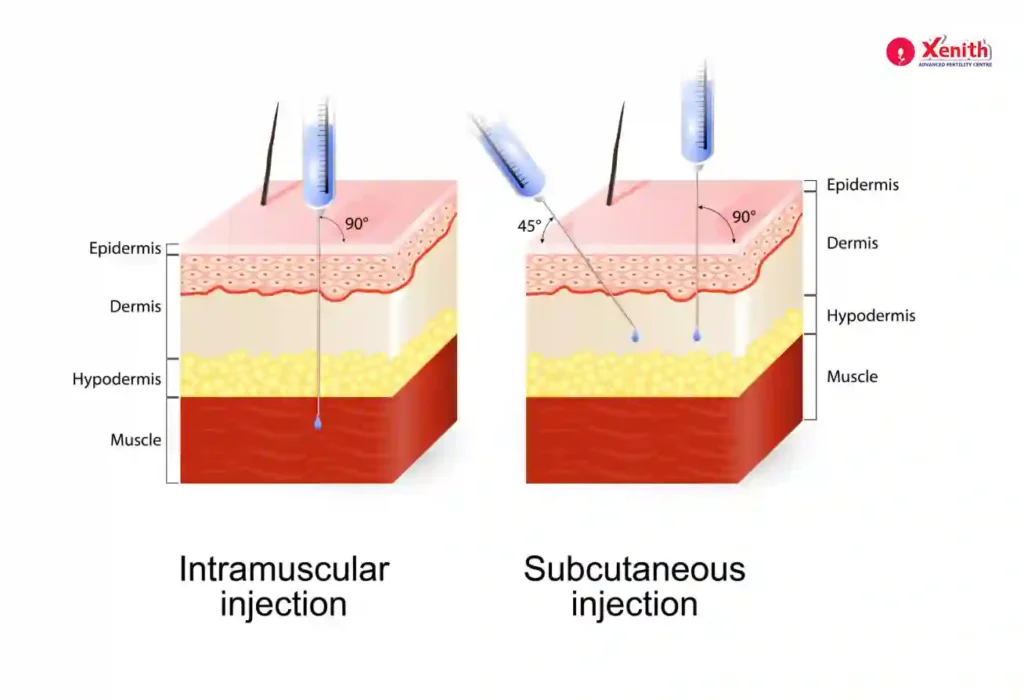
- Subcutaneous injections
- Intramuscular injections
Knowing the difference helps reduce anxiety because the technique is slightly different for each.
Subcutaneous Injections
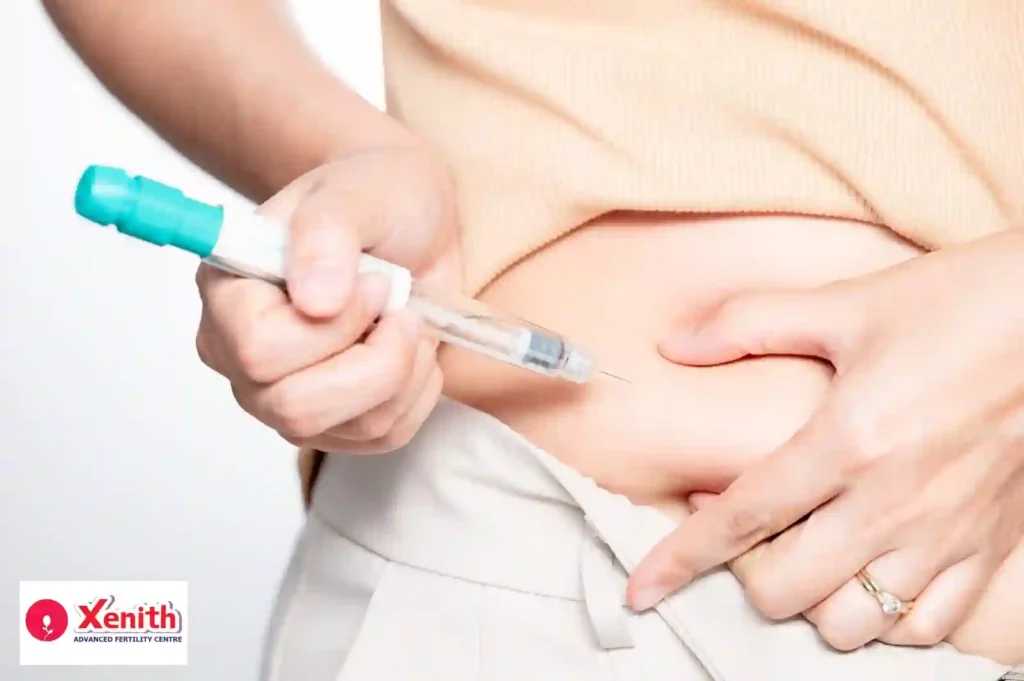
Subcutaneous injections are given into the layer of fatty tissue just beneath the skin. Most ovarian stimulation medications are administered this way.
The most common IVF injection site abdomen is the lower part of the abdomen, a few centimetres away from the navel. Depending on the medication, some injections may also be given in the upper thigh if advised by your fertility team. Because these injections use very small needles, patients are often pleasantly surprised by how little discomfort they experience.
Intramuscular Injections
Intramuscular injections are delivered deeper into the muscle using a longer needle.Some progesterone preparations used after egg retrieval or embryo transfer may be administered this way. These injections are commonly given in the upper outer part of the buttock or another muscle site recommended by your fertility team. If you’re prescribed an intramuscular injection, your nurse will explain the technique carefully before treatment begins.
How to Self Inject IVF Medication
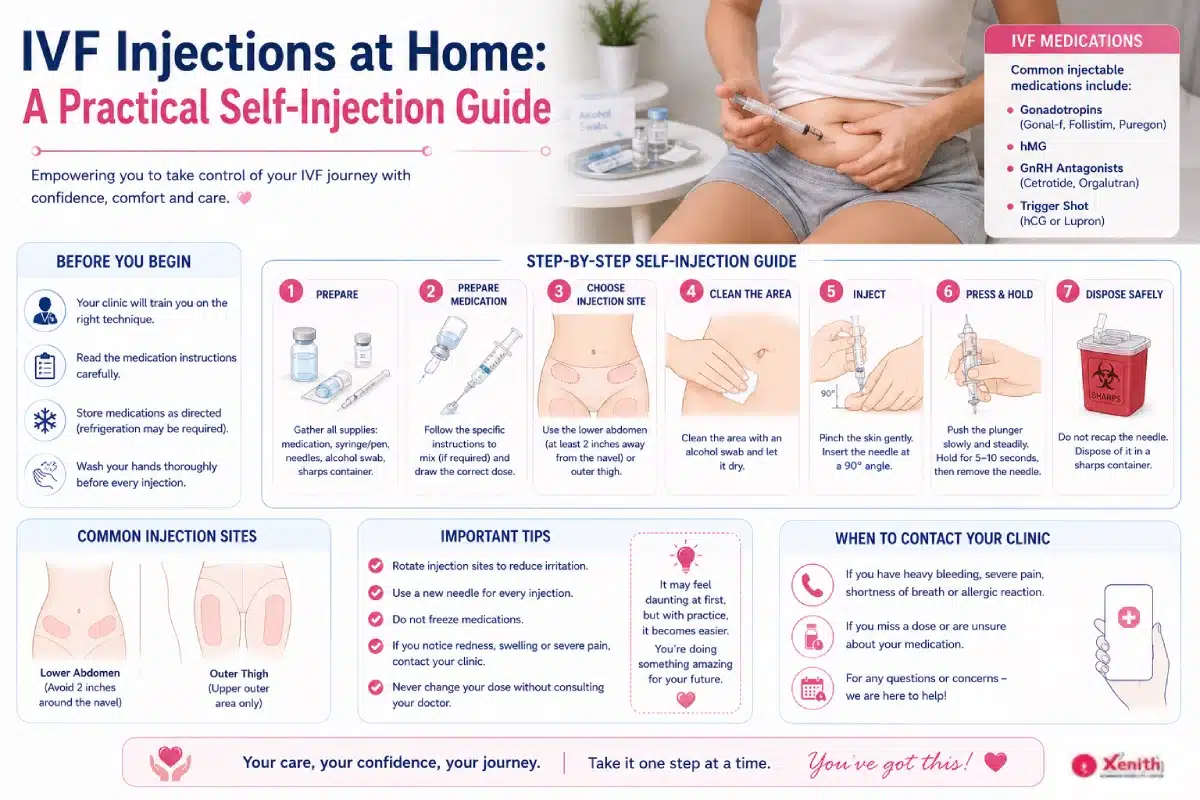
One of the best ways to reduce anxiety is to have a simple routine that you follow every day. Here’s the step-by-step process I usually teach my patients when discussing how to self inject IVF medication.
Step 1: Prepare Your Supplies
Before starting, gather everything you’ll need in one clean area.
This usually includes:
- Your prescribed medication
- Syringe or injection pen, depending on the medication
- Needle, if applicable
- Alcohol swab
- Cotton or gauze
- Sharps disposal container
Having everything ready before you begin makes the process much smoother.
Step 2: Wash Your Hands
Always wash your hands thoroughly with soap and water before handling your medication. Good hand hygiene helps reduce the risk of infection.
Step 3: Prepare the Medication
Some IVF medications come as pre-filled pens, while others require mixing before use. Follow the instructions provided by your fertility clinic exactly.
Double-check:
- The medication name
- The prescribed dose
- The expiry date
I always encourage patients to pause for a few seconds and verify the dose before injecting. Taking your time is much better than feeling rushed.
Step 4: Choose the Injection Site
For most subcutaneous injections, select an area on either side of the lower abdomen while avoiding the area immediately around the belly button. Try not to inject into bruised, swollen, or tender skin. Choosing a slightly different location each day helps reduce soreness.
Step 5: Give the Injection
- Clean the skin with an alcohol swab and allow it to dry.
- Gently pinch a fold of skin between your fingers.
- Insert the needle as instructed by your nurse, inject the medication slowly and steadily, then withdraw the needle smoothly.
- Apply gentle pressure with cotton or gauze if needed.
- Avoid rubbing the area vigorously afterwards, as this may increase bruising.
If you’re receiving an intramuscular injection, the technique will differ, and your fertility team will demonstrate it during your teaching session.
Common Side Effects and How to Manage Them
Most women experience at least some minor side effects during ovarian stimulation. Fortunately, these are usually temporary.
Bruising
Small bruises around the injection site are common. Rotating injection sites and applying gentle pressure after the injection can often help minimise bruising.
Mild Soreness
Some tenderness at the injection site is normal, particularly after repeated injections. Avoid repeatedly injecting into exactly the same spot.
Hormonal Changes
The medications themselves may cause temporary symptoms such as:
- Bloating
- Breast tenderness
- Mood changes
- Fatigue
- Mild headaches
Many patients tell me they feel more emotional during stimulation.
This is entirely understandable. Between hormonal changes and the emotional investment in treatment, IVF can feel overwhelming at times.
Practical Tips That Make IVF Injections Easier
Over the years, I’ve noticed that a few simple habits make a big difference.
Give Your Medication at the Same Time Each Day
Most IVF medications work best when administered consistently according to your treatment schedule. Setting a daily alarm can help you remember.
If you think you may miss a dose or have already missed one, contact your fertility clinic rather than adjusting the schedule yourself.
Rotate Injection Sites
Repeated injections into the same area can increase bruising and discomfort. Alternating between the left and right sides of the abdomen allows each area time to recover.
Store Medication Correctly
Some IVF medications require refrigeration, while others can be stored at room temperature. Always follow the storage instructions provided with your medication. Incorrect storage may reduce the medication’s effectiveness.
Travelling with IVF Medication
If you need to travel during treatment, plan ahead. Carry your medication carefully according to the recommended storage conditions and ensure you have enough supplies for your trip.
If you’re unsure whether travel fits safely within your treatment schedule, discuss it with your fertility specialist beforehand.
Should You Give the Injection Yourself or Ask for Help?
There is no right or wrong answer.
Some patients prefer to administer every injection themselves because it gives them a sense of independence and control. Others feel much more comfortable asking their partner or a family member to help, particularly if an intramuscular injection has been prescribed. I’ve seen both approaches work equally well.
If your partner will be helping with injections, I recommend that they attend the injection teaching session with you whenever possible. Learning together often increases confidence for both of you. Ultimately, the goal is simply to ensure that the medication is administered safely and correctly.
How Our Nursing Team Supports You
One thing I always remind my patients is that they are not expected to learn everything on their own. Before your IVF cycle begins, our nursing team provides a dedicated injection teaching session where you’ll learn:
- How to prepare your medication
- The correct injection technique
- Safe injection site selection
- Medication timing
- Storage instructions
- How to dispose of used needles safely
Many patients find that practising once under supervision removes much of the anxiety they felt beforehand.
If you have questions after returning home, we also encourage you to contact the clinic rather than worrying on your own. A quick conversation can often prevent unnecessary stress and help you stay on track with your treatment.
Final Thoughts
Starting IVF can feel overwhelming, especially when you’re preparing to give yourself injections for the first time. The good news is that IVF injections at home become much more manageable with the right guidance and a little practice.
Most patients who are initially nervous discover that the injections are far less intimidating than they expected. Following a consistent routine, rotating injection sites, and understanding the difference between subcutaneous vs intramuscular IVF injection techniques can make the process smoother and more comfortable.
Remember, you don’t have to do this alone. Whether you choose to self-administer your medication or involve a partner or family member, our team is here to guide you every step of the way.Before your treatment begins, we encourage you to attend your injection teaching session so you can start your cycle with confidence. We’ll demonstrate the technique, answer your questions, and ensure you feel comfortable giving your medication safely at home. Our goal is to make this part of your IVF journey as simple and stress-free as possible.