One of the most emotional conversations I have with patients is after a failed embryo transfer. The disappointment is especially difficult when the embryo was of good quality and everything appeared to go according to plan. Almost immediately, the questions begin: “Why didn’t it work?” “Is there something we missed?” “Should we try another test before the next transfer?”
One test that often comes up at this stage is the ERA test IVF, also known as Endometrial Receptivity Analysis.

Free Thursday Consultation
Book Your AppointmentSome patients come to me having already read about it online, while others have heard about it from friends or fertility support groups. There’s often an expectation that the ERA test will identify the exact problem and guarantee success in the next cycle. Unfortunately, fertility treatment is rarely that straightforward.
In this article, I’d like to explain what the ERA test actually measures, who may benefit from it, and why I believe it should be recommended only in carefully selected situations rather than as a routine part of IVF.
Understanding the “Window of Implantation”
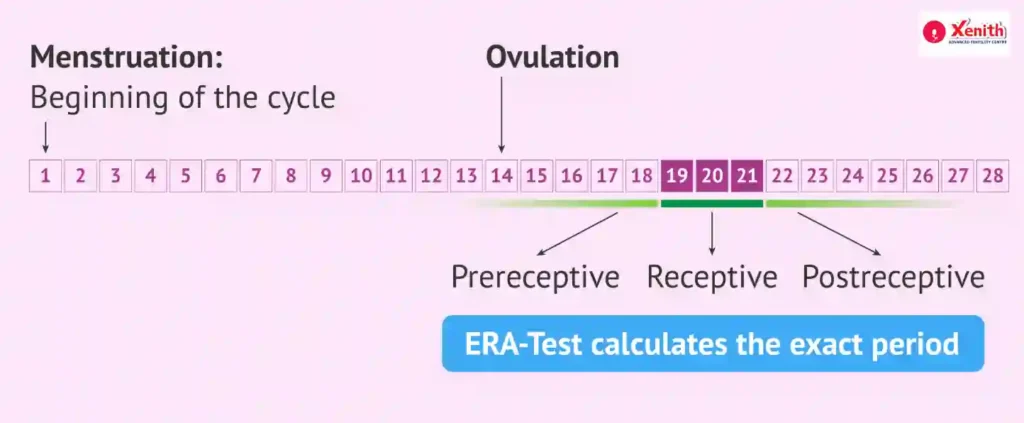
For an embryo to implant successfully, two things must happen at the same time. First, the embryo must reach the right stage of development. Second, the lining of the uterus, the endometrium, must be ready to receive it. This period, when the endometrium is most prepared for implantation, is known as the window of implantation.
I often explain it to my patients using a simple analogy. Imagine arriving at a house for an important appointment. Even if you arrive at the correct address, you won’t be able to enter if the door hasn’t been opened yet or if you’ve arrived after it has already been locked.
Similarly, an excellent embryo may still fail to implant if the endometrium is not receptive at the time of transfer.
For most women, this window occurs at a predictable time after progesterone exposure. However, research suggests that in a small number of women, the window may open slightly earlier or later than expected. The ERA test is designed to look for this possibility.
What Does the ERA Test Actually Measure?
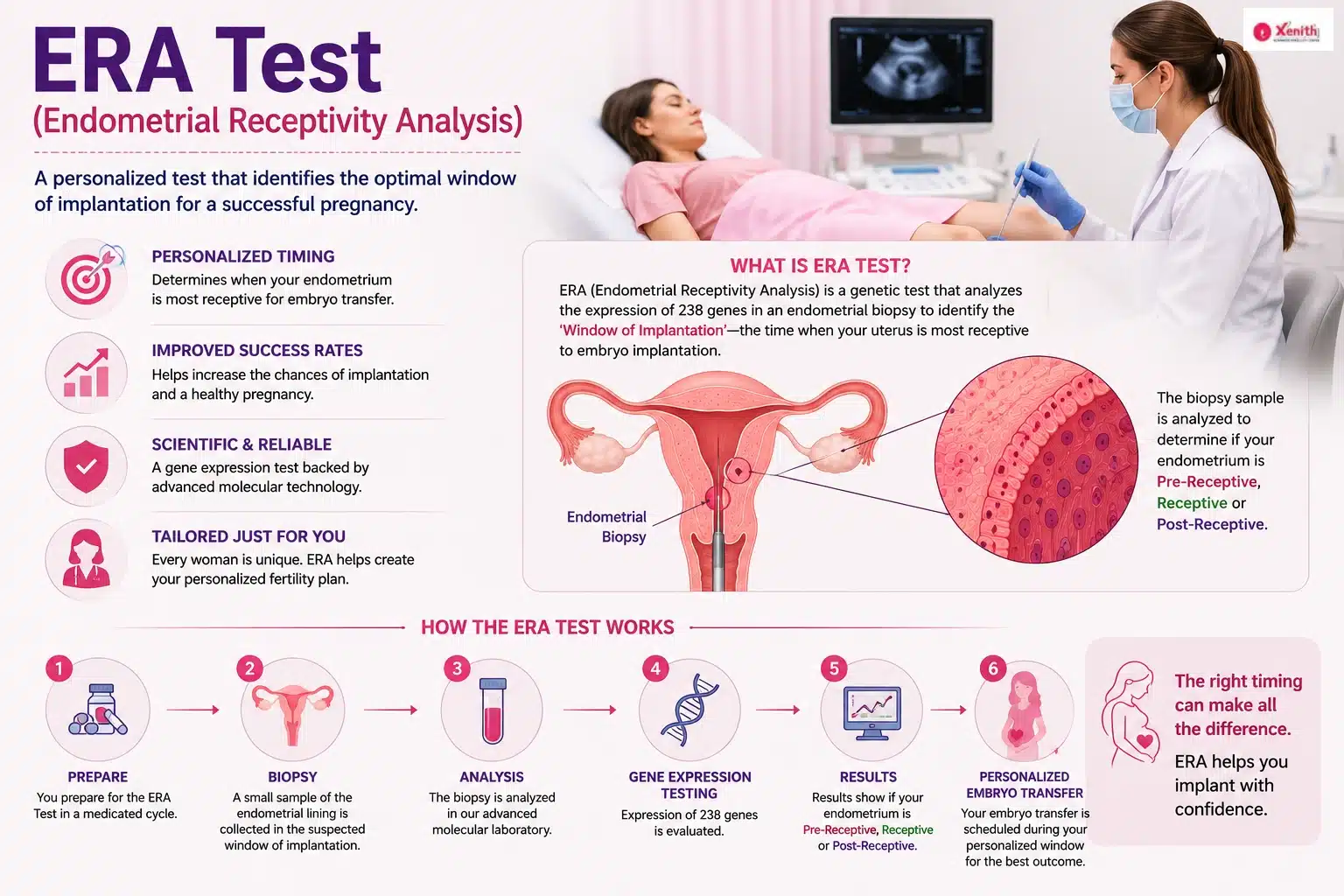
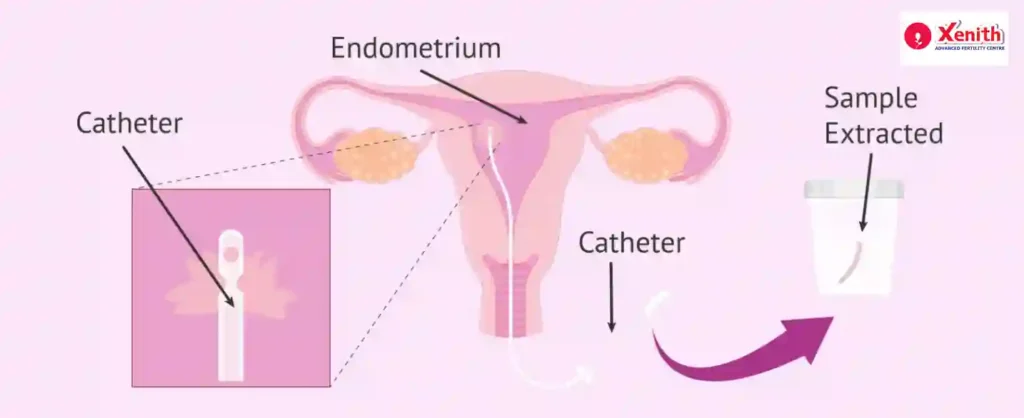
The Endometrial Receptivity Analysis is not a blood test or an ultrasound scan. Instead, it involves taking a very small sample of the uterine lining through an endometrial biopsy.The tissue is then analysed to study the activity of hundreds of genes associated with endometrial receptivity. Rather than simply looking at the cells under a microscope, the test evaluates patterns of gene expression to determine whether the endometrium is ready for embryo implantation.
In other words, the ERA test attempts to identify whether the biopsy was taken during your personal window of implantation. This information can then be used to plan a personalized embryo transfer, where the timing of progesterone exposure and embryo transfer is adjusted if necessary.
Who Is the ERA Test Usually Recommended For?
One of the biggest misconceptions I encounter is that every IVF patient should undergo an ERA test before embryo transfer. In reality, that is not how I use it in clinical practice.
The ERA test is generally considered for patients with repeated implantation failure, particularly when good-quality or genetically normal (euploid) embryos have repeatedly failed to implant despite otherwise favourable conditions.
For example, I may discuss the possibility of an ERA test with a patient who has experienced more than one unsuccessful transfer despite having:
- Good-quality embryos
- A healthy uterine cavity
- Appropriate endometrial thickness
- No obvious medical explanation for implantation failure
Even then, the decision is individualized.
Understanding the Results: Receptive, Pre-Receptive, and Post-Receptive
The ERA report generally classifies the endometrium into one of three categories.
Receptive
A receptive result suggests that the biopsy was taken during the expected window of implantation. In this situation, the timing of embryo transfer is usually considered appropriate, and no adjustment is generally recommended.
Pre-Receptive
A pre-receptive result indicates that the biopsy was performed before the window of implantation had fully opened. In practical terms, this means the embryo transfer may need to be delayed slightly by extending progesterone exposure before transfer.
Post-Receptive
A post-receptive result suggests that the biopsy was taken after the ideal implantation window had already begun to close. If this occurs, the next embryo transfer may be scheduled earlier by reducing the duration of progesterone exposure.
Patients often ask me whether an abnormal ERA result guarantees that changing the timing will lead to pregnancy. The answer is no. The test may help identify a difference in implantation timing, but it cannot guarantee that adjusting the transfer schedule will result in successful implantation.
What the ERA Test Can and Can’t Promise
This is probably the most important part of the discussion. The ERA test is considered an add-on investigation, and scientific evidence regarding its overall benefit remains mixed.
Some studies suggest that selected patients with repeated implantation failure may benefit from personalized embryo transfer based on ERA findings. Other studies have not shown a clear improvement in pregnancy or live birth rates when the test is used routinely. Because of this, I believe it is important to have an honest conversation with every patient.
I never recommend the ERA test as a guarantee of success or as a test that every IVF patient must undergo. Instead, I explain that it is one possible tool that may provide additional information in carefully selected clinical situations. Managing expectations is just as important as choosing the right investigation. I would rather patients make informed decisions based on evidence than pursue every available add-on with unrealistic hopes.
What Does the Procedure Involve?
The ERA test is performed during a specially prepared mock cycle that closely resembles the hormonal preparation used before a frozen embryo transfer. After the endometrium has been prepared and progesterone has been administered for the planned duration, a small endometrial biopsy is taken.
The procedure is usually completed in the outpatient setting and takes only a few minutes. Most women experience temporary cramping similar to menstrual discomfort, although the intensity varies from person to person.
The tissue sample is then sent for laboratory analysis, and the results help determine whether the embryo transfer schedule should remain the same or be modified in a future treatment cycle.
Patients also frequently ask about the ERA test cost. Since the test requires specialized laboratory analysis in addition to the biopsy procedure, it is generally more expensive than routine fertility investigations. The exact cost varies between fertility centres and depends on laboratory processing charges and treatment protocols.
Are There Other Tests That May Be Considered?
The ERA test is not the only investigation that may be discussed after unsuccessful embryo transfers. Depending on the patient’s history, other evaluations may also be appropriate.
One example is endometrial scratching, which has been explored as another approach to improving implantation in selected cases. Like the ERA test, its role continues to be studied, and it is not recommended routinely for every patient.
The important point is that no single test provides all the answers. Decisions should always be based on the complete clinical picture rather than one investigation alone.
Final Thoughts
If you’ve experienced one or more failed embryo transfers, it’s completely natural to wonder whether additional testing could improve your chances.
The ERA test IVF may be useful for some patients, particularly those with repeated implantation failure despite transferring good-quality or euploid embryos. However, it is not a universal solution, and it should not be viewed as a guarantee of pregnancy.
Whenever I discuss the ERA test with my patients, I focus on one question above all: Will this test genuinely help us make a better treatment decision for this individual patient?
Sometimes the answer is yes. Sometimes the answer is no.
Every fertility journey is unique, and the decision to undergo an endometrial receptivity analysis should be made after carefully reviewing your treatment history, embryo quality, uterine health, and previous IVF outcomes.
If you’re considering the window of implantation test or have been advised to undergo a personalized embryo transfer, I’d encourage you to discuss your individual case during your next consultation. Together, we can decide whether the ERA test is likely to add meaningful information for your next IVF cycle.